Having just finished this book you might be glad to hear that I am now down to my last three on the bedside table.
Although describing the overall campaign “Those Ragged Bloody Heroes” concentrates on the 39th Militia Battalion and is a stirring history of triumph, tragedy and controversy set in the mud and steaming jungle of the Kokoda Trail and the fire swept beaches at Gona.
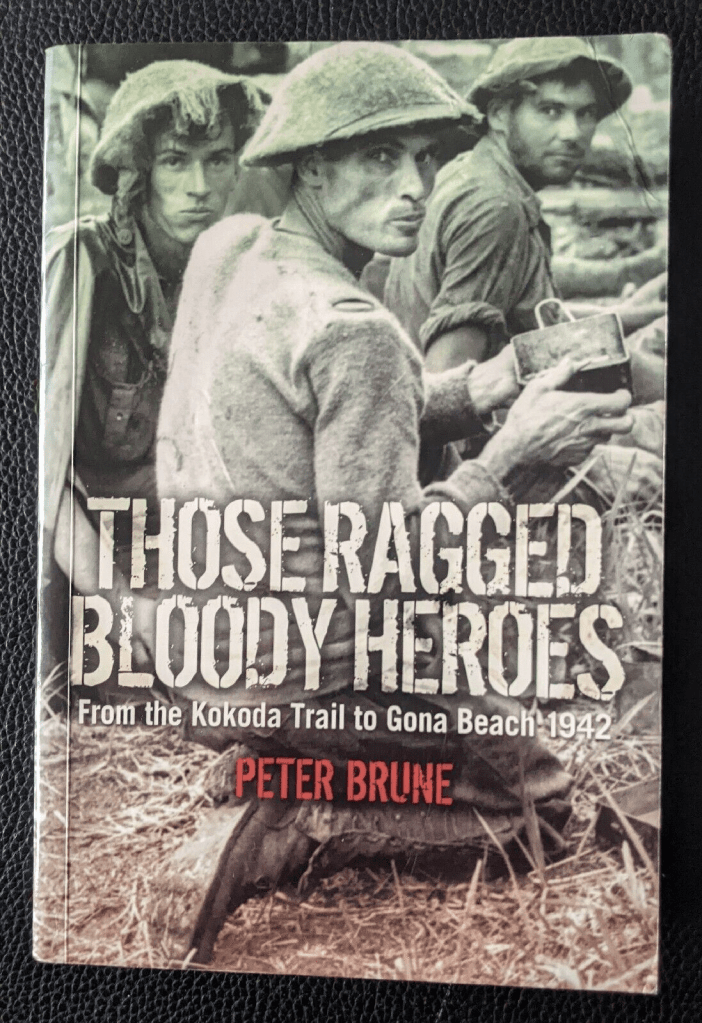
During July to September 1942 the Japanese set about the capture of Port Moresby by an overland crossing of the Owen Stanley Range, and a landing in Milne Bay. To oppose a force of 10,000 crack Japanese troops on the Kokoda Trail, the Allies committed one under-trained and poorly-equipped unit – the 39th Battalion, later reinforced by Veterans of the 21st Brigade, 7th Division AIF. These were the men of Maroubra Force.
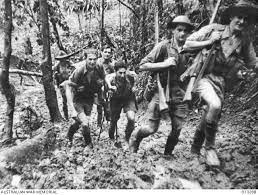
The Australians put up a desperate fight. They withdrew village by village, forcing the Japanese to fight for every inch of ground. Finally at Ioribaiwa, the Japanese turned away, beaten and exhausted. The Australian soldiers’ reward for their remarkable achievement was denigration by the High Command – General Blamey called them ‘running rabbits’.
Then in December 1942 when the fighting at the beachheads had produced little success, the former members of Maroubra Force captured Gona after heavy fighting – but at a tragic cost.
“Those Ragged Bloody Heroes” is the story of those battles told as never before, through the eyes of the Australian soldiers who fought there. It is a story that raises serious questions about the planning and command of the Kokoda and Gona campaigns.
Generals Blamey and Macarthur were so out of touch with the conditions, the difficulties of supply, and the fact they believed the Japanese to be out-numbered that they blamed the troops and not their total incompetence. Australian strategic thinking relied on a “Fortress Singapore” mentality so there was no consideration of fighting an South East Pacific war. The lack of foresight, planning. logistic support, intelligence and a distinct lack of mapping were the cause and not the fighting quality of “Maroubra Force”.
A cursory glance at the book will show you why Thomas Blamey was hated by his own troops.

His dressing down of “Maroubra Force” caused booing, interjection and turning of backs. The sacking of their Commander, Brigadier Arnold Potts caused a huge drop in morale and the resignation of most of the commanding officers. Potts refused to accept their letters and encouraged them to support the new appointment.
Potts fought alongside his men and his courage was demonstrated when Maroubra force was outflanked at the battle of Mission Ridge and their Brigade Headquarters was attacked at Battalion Hill is undoubted. He and the cooks clerks, storemen, and communications staff stood firm and repulsed the much larger Japanese flanking force. This was why he was so well liked.
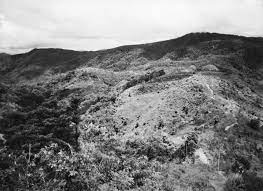
The 39th were rewarded for their bravery by being totally dispersed among other battalions with the Australian Jungle Division reorganisation and totally expunged from the OOB
“Those Ragged Bloody Heroes” is meticulously researched with many eye witness quotes to reinforce the facts Peter Brune is presenting. Detailed notes references and index make this a superb piece of work. It may well be a polemic to put forward the true story of Maroubra Force and the 39th Militia Battalion in particular, but this is both understandable and to be commended. The book was very readable and hard to put down. Best I have read on Kokoda so far.