Growing up as a young boy along with the Phantom and The Fantastic Four comics I vividly remember the “Boys Own Annuals” that I would receive for Christmas. They were full of daring tales and exciting adventures. A kind of written version of Indiana Jones’ escapades. The story below would be more fitting in a Commando Magazine, one of my other favourites, but as the Mark Twain saying goes “truth is stranger than fiction“.
The story was later taken, totally messed up and turned into a a movie, as only Hollywood can do, “Attack Force Z”, starring Mel Gibson, Sam Neil, and John Waters. Mel Gibson was later quoted as saying “the film is pretty woeful… it’s so bad, it’s funny”.
The story was about Australian Commandos rescuing some downed pilots from the Japanese.

The real story, to paraphrase Gibson ” is so quirky and way out there it is amazing”.
I am indebted to the Sydney Morning Herald article by Tom Allard and Lindsay Murdoch, and Frank Walker’s book, “Commandos”, for the following story.
In the dead of night, they made their way slowly through the groves of sweet-smelling nutmeg and clove trees, around twisted formations of cold lava and down the perilously steep slope of the volcano that towers over the island of Ternate.
Leading the party was Achmed Bashir, a local guide. By his side was an officer from Z Special Unit, also known as Z Force, the elite surveillance and sabotage unit that wreaked havoc across Japanese-occupied south-east Asia. Among the 40 or so on the trek were the Sultan of Ternate, Iskander Muhammad Jabir Syah, the ruler of one of the most fabled of the Spice Islands, the latest of an unbroken line of monarchs stretching back over 800 years.

Photo from the Sydney Morning Herald.
Accompanying him were his two wives, one of them heavily pregnant, his eight children and a retinue of courtiers and relatives.
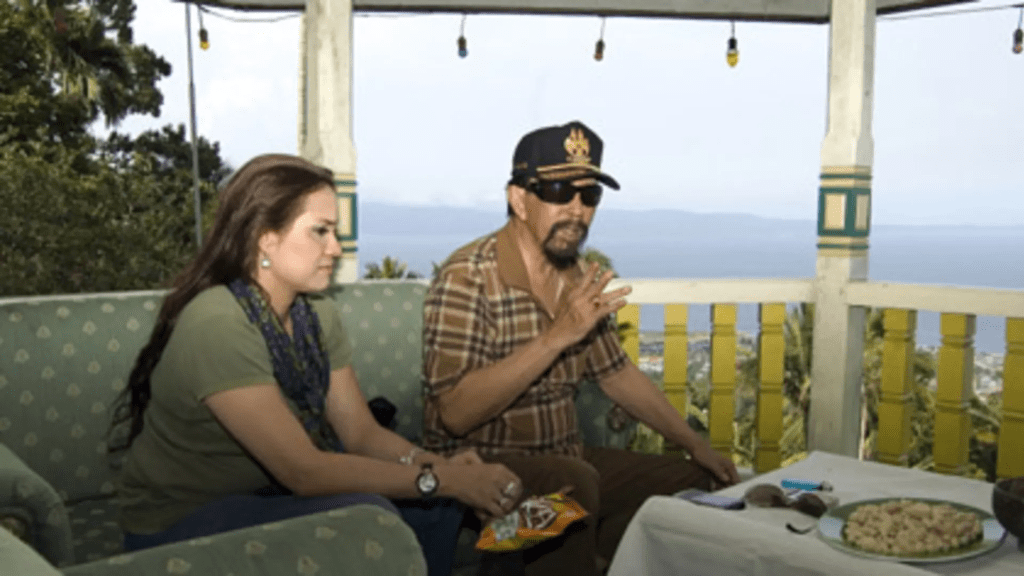
The Sultan Mudaffar Syah (who was ten at the time) and his Queen – Photo from the Sydney Morning Herald.
“It was very dark. Up and down we went. We stayed close together. There were Japanese spies everywhere,” says Mudaffar Syah, who succeeded his father as sultan.
My God, that was an experience. No one talked. No one could say anything. There could be no light. This is what the intelligence officer said.”
It was the early hours of April 9, 1945, and Project Opossum was approaching its climax.
An audacious operation to snatch the sultan and his family from under the noses of the Japanese troops garrisoned on Ternate, Project Opossum was ordered by the Allies’ supreme commander in the Pacific, General Douglas MacArthur.
The reign of the Japanese in Ternate, in the north-eastern corner of the Indonesian archipelago, had been especially brutal because of Sultan Jabir’s refusal to bow to their authority. Starvation and disease were widespread. He had been sending clandestine intelligence to the Allies and was convinced he and his family were to be slain
Little has been written about the mission, not uncommon for the highly classified operations of Z Special Unit, a multinational special forces team which had its headquarters in Australia and was mainly made up of Diggers.
“This history must be written and distributed in Australia,” says Sultan Mudaffar. “For us here, Australia is the hero of the Second World War.”
The operation is a fascinating insight into Australia’s wartime support for the Dutch to regain the Netherlands East Indies, the sprawling archipelago that now makes up most of Indonesia.
That support was later reversed by the prime minister, Ben Chifley to the anger and surprise of the Western powers.
The escape plan had been hatched two months earlier after the sultan had sent a team of Ternatans to row a traditional prahu boat 200kilometres to Morotai, an island to Ternate’s north captured by the Allies six months earlier and now General MacArthur’s base as he prepared for the final push on the Japanese. The Ternatans told the general of the threat to the sultan’s life.
A Z Force contingent of 13 was assigned to the mission, mostly Australians plus two Indonesian recruits from West Timor and North Sulawesi. Bombers strafed Japanese positions across the northern Moluccas as their boats snuck behind enemy lines to Hiri, a small island nearly two kilometres north of Ternate.
From Hiri, the message that Z Force had arrived was sent up the volcano with the guide and the intelligence officer to where the royal family was hiding.
They all descended safely to the coastal village of Kulaba after a six-hour trek, where two prahu took them to Hiri.
Ecstatic villagers greeted Sultan Jabir, squatting “with one raised knee, with hands pressed against their faces in an attitude of prayer, and remained so until dismissed by a nod from the sultan”. Village elders lined up to kiss his feet.
Sultan Mudaffar said his father was deeply concerned by the commotion. “My father said to them: ‘Watch what you are doing. The Japanese will see you’.”
His fears were well-founded. At dawn the next day, several boatloads of Japanese soldiers headed across. One of them had already landed on a small beach when Z Force commanders were informed of their arrival.
Lieutenant George Bosworth, an Australian officer, was guarding the sultan and rushed about 500 metres to the landing site.
“This man was too brave,” says Sultan Mudaffah. “According to my father, he was just standing there, shooting. My father said ‘you can’t just stand there’.”
Three of the Japanese soldiers fell on the beach. Lieutenant Bosworth approached one of them, apparently dead or badly injured. He had not perished and, as Lieutenant Bosworth came close, the soldier picked up his rifle and shot him in the head. Warrant Officer Perry assumed command and attacked the remaining Japanese.
The remnants of Japanese tried to swim back to Ternate but all were killed by the machetes of pursuing natives in canoes before they reached shore. The sea was turned red with blood.
The sultan and his family were taken to Morotai by PT boat, where Sultan Jabir debriefed General MacArthur on Japanese troop positions, tactics and morale.
But the Allies had grander plans. They saw him heading eastern Indonesia under a new Dutch-controlled federation.
Sultan Jabir and his family were sent to Camp Columbia in Wacol, a small town between Brisbane and Ipswich, where the exiled Netherlands Indies Civil Administration plotted its return.

In October 1945, soon after the war ended, the sultan returned to Ternate to reclaim power.
But Indonesia’s independence heroes Sukarno and Mohammad Hatta had already proclaimed the Republic of Indonesia, prompting a Dutch counter-offensive that lasted four years, which is yet another story.
I can see a Bolt Action Scenario emerging!