Many of the readers will have many more similar stories to this one. The United States and Australia was extremely lucky in both wars in that the fighting did not occur in our homelands, although both Hawaii and Darwin were both bombed and protectorates of both countries were invaded. This story is significant to us because we had so few tales of tragedy like it.
On Tuesday 3 March, 1942 Broome experienced the first of four Japanese air raids it would face during the Second World War. During the raid 24 aircraft were targeted and destroyed, including 15 flying boats that were sitting in the bay having stopped in Broome to refuel.
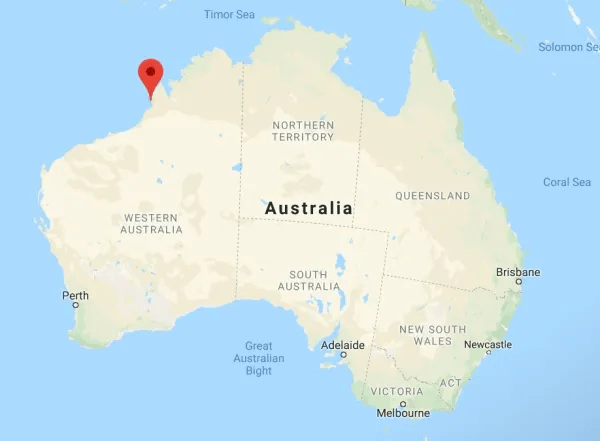
Today Broome is a thriving tourist town on the North west coast of Western Australia. During WW2 it was a remote pearling town that was used as a re-fuelling base for the evacuees from the Dutch East Indies.

The Japanese attack on Broome is the second most deadly air raid on Australia soil in our history and yet it’s almost entirely overlooked.
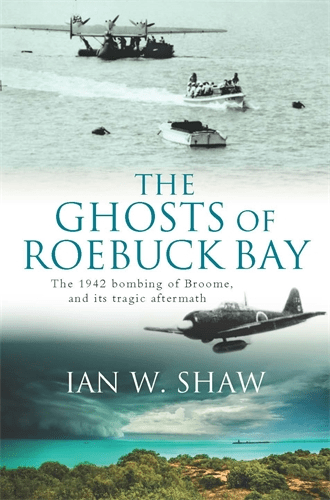
I have only recently been made aware of the attacks on Broome and sourced the”Ghosts of Roebuck” via Amazon as a result.
The book tells the story of a tragedy, “shining a light on a story that has slipped through the cracks of history”. I found it a captivating read that covered the lives of many of the “actors”, before, during and after the attack. These vignettes are enthralling.
On 3 March 1942, nine Japanese Zero planes strafed the small town planning to destroy the aerodrome and the Dutch, RAAF and US planes based there.

This image was taken from a Japanese ‘Babs’ reconnaissance aircraft, which accompanied the fighters and gave instructions regarding targets.
With no notice, the townsfolk could only put up minimal opposition and in an attack that lasted only ten minutes, almost one hundred men, women and children lost their lives. Not a single operational aircraft remained in Broome, but the shocking loss of human life can never be truly calculated.

Today during extremely low tides, the wrecks of six flying boats can still be seen in the sands of Roebuck Bay. These sites are protected under the Australian heritage act.
As I indicated above many of the flying boats attacked in Roebuck Bay on 3 March 1942 were carrying Dutch refugees who had fled the Dutch East Indies ahead of the Japanese invasion. The aircraft were being refuelled in Broome before flying on to southern towns and cities.
It is not known how many refugees were in the flying boats which had left Java in haste, but many were women and children who thought they had finally reached the safe haven of Australia.

Ironically this toy soldier, corroded by sea water, was collected from the wrecks.

After the raid about thirty bodies were retrieved from the bay, and were buried in the cemetery near Town Beach; many others were never found.
In 1950, the bodies were exhumed and moved to the Karrakatta war cemetery in Perth or repatriated back to Holland or the Dutch East Indies
I really liked this book and would suggest that any Australian should read it, if only to be educated on the impacts of war on human lives. Those from other countries would have countless stories of their own to read.