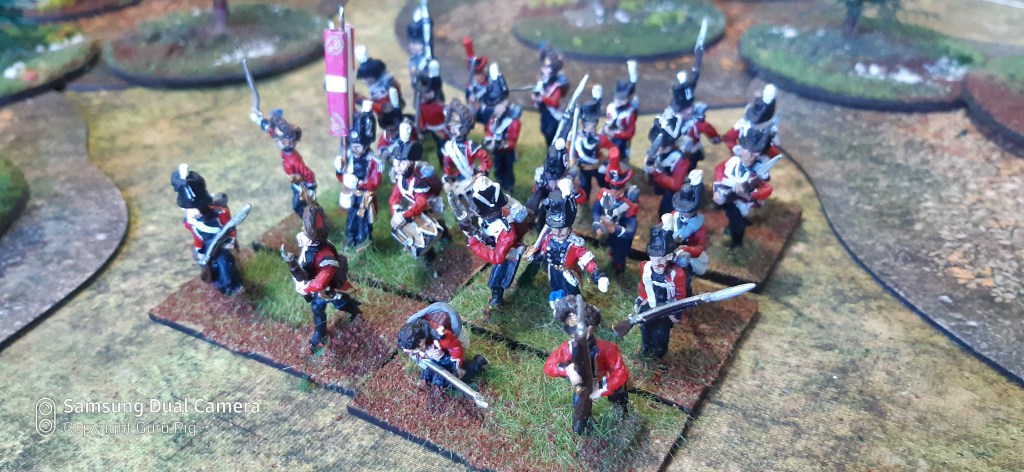
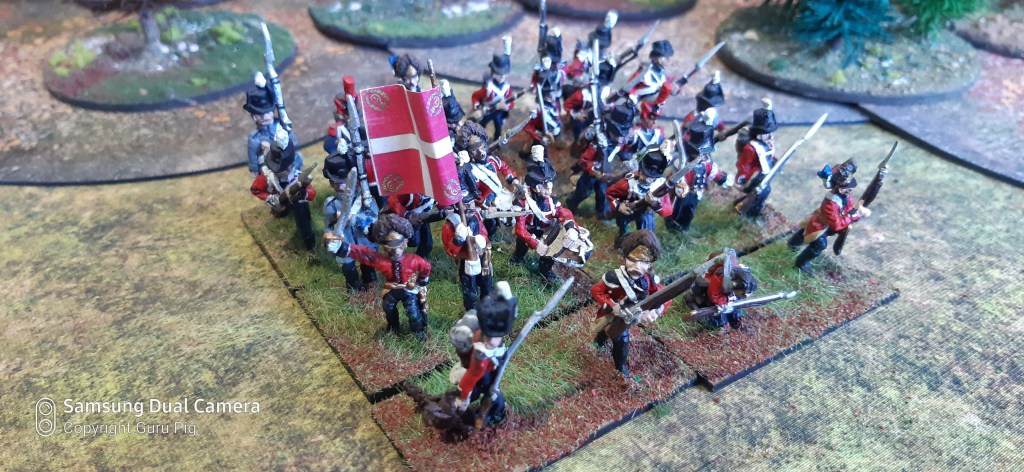
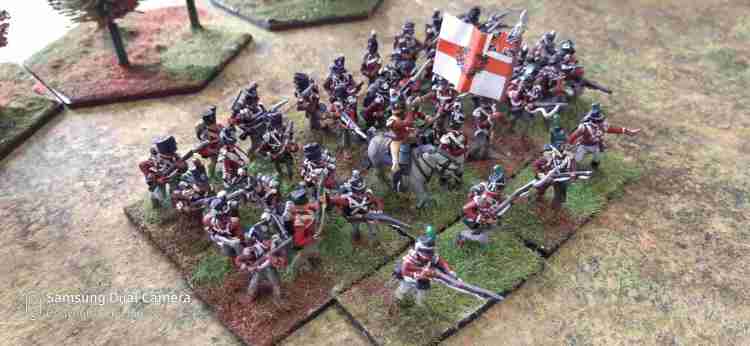
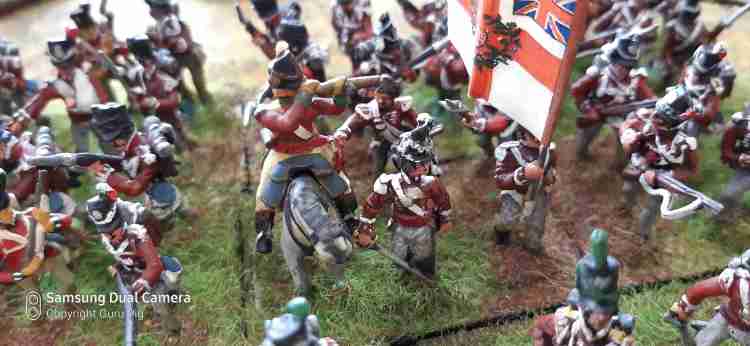
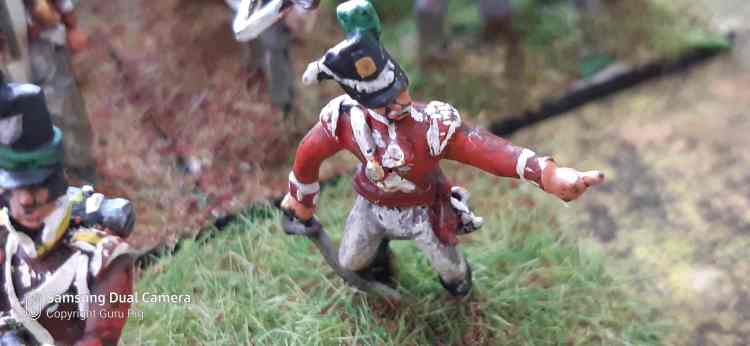
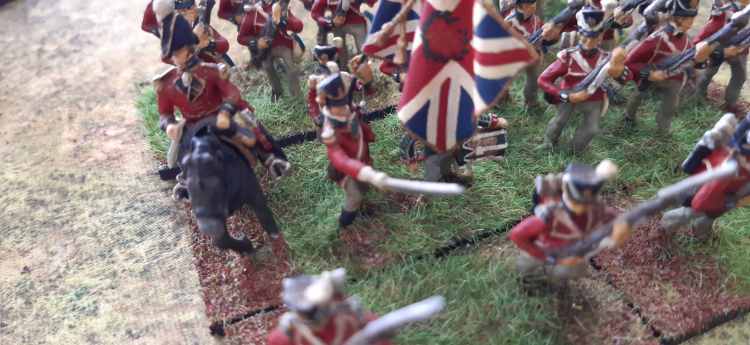
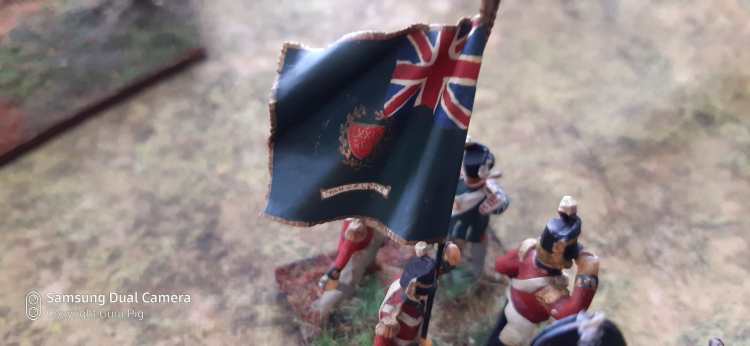
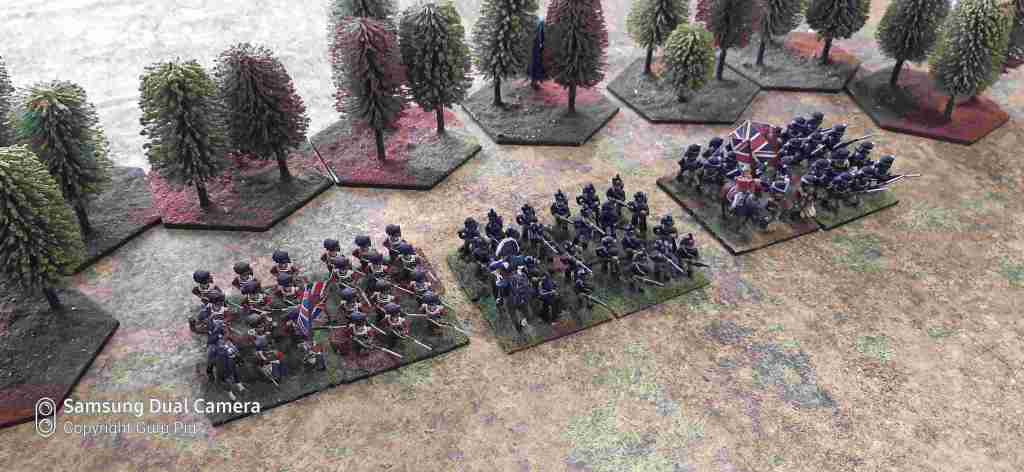
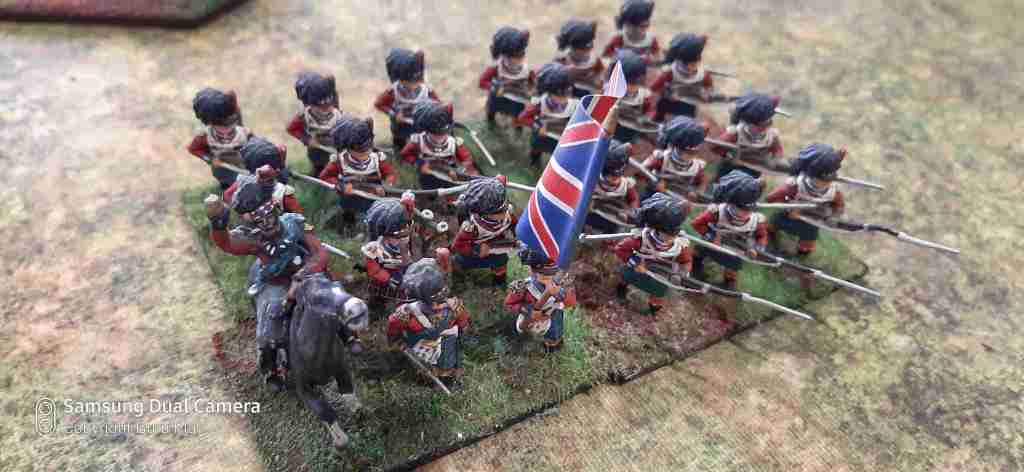
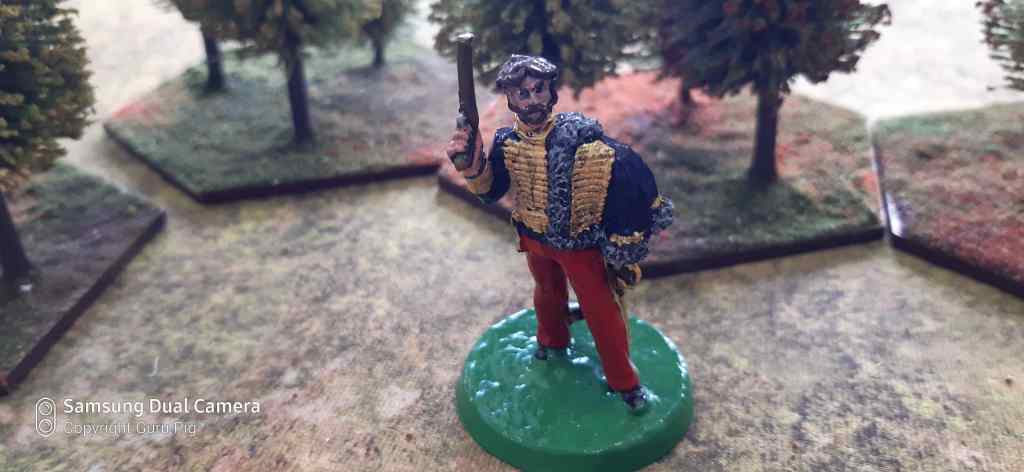
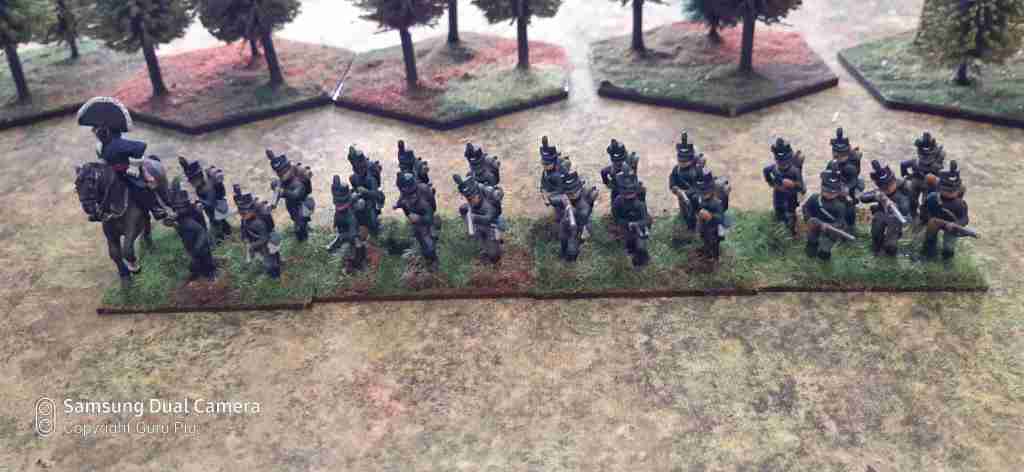
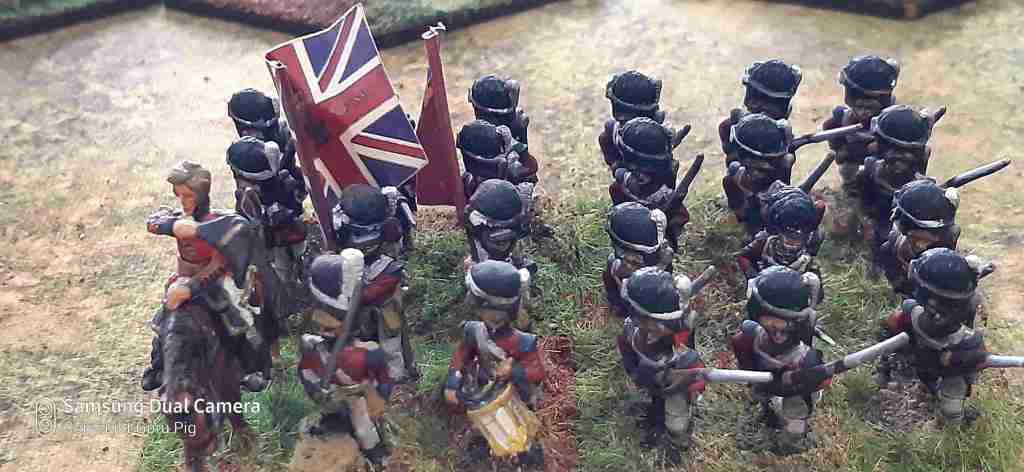
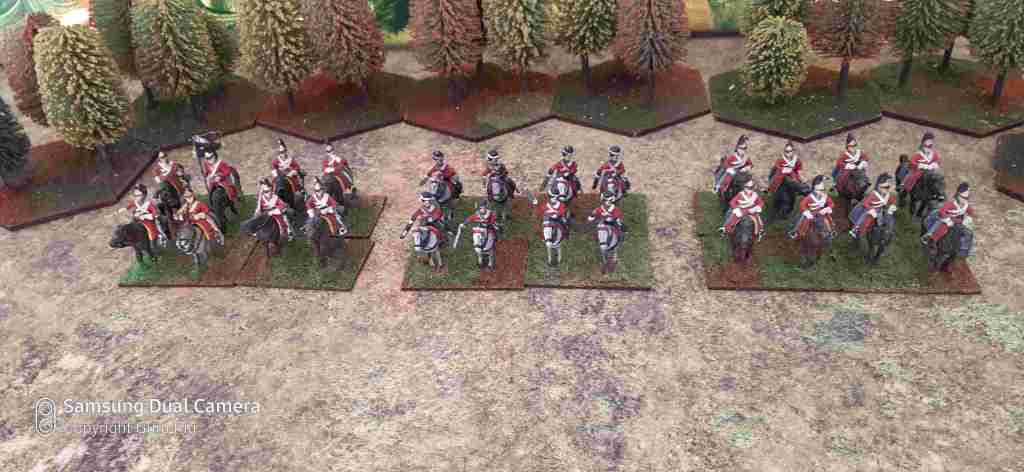
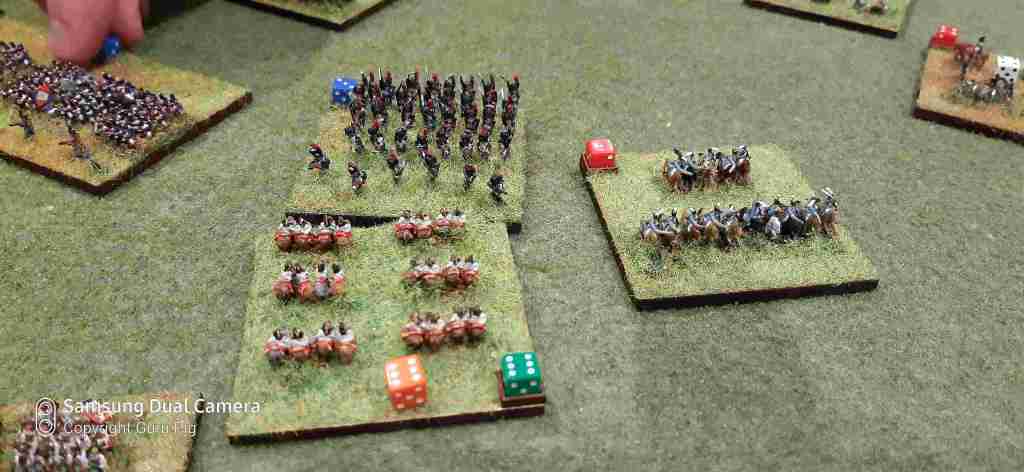
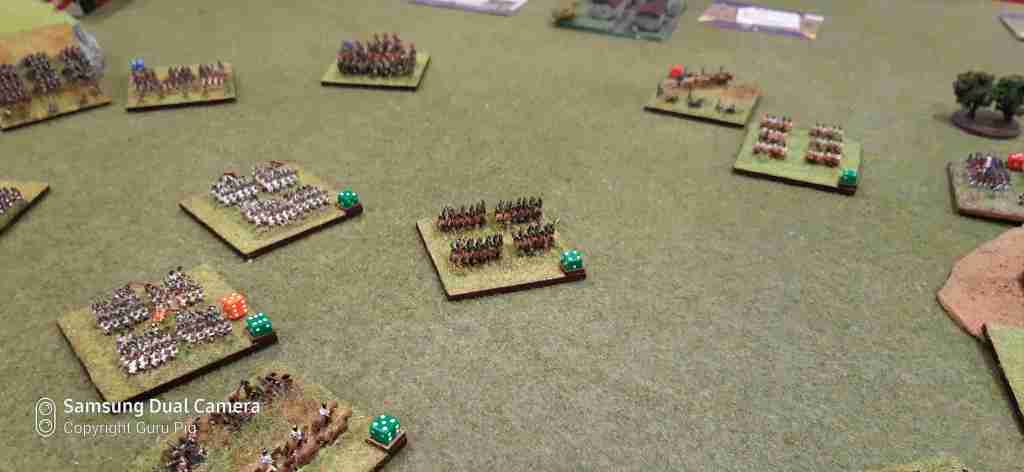
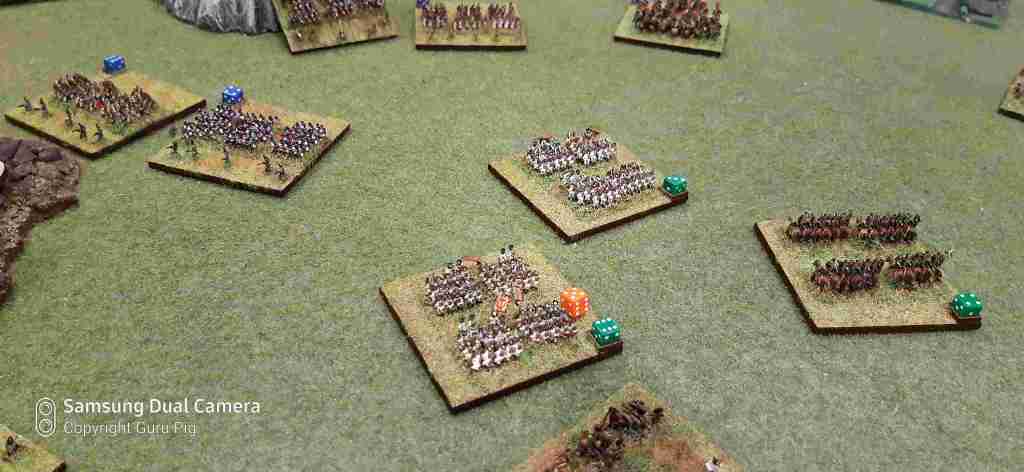
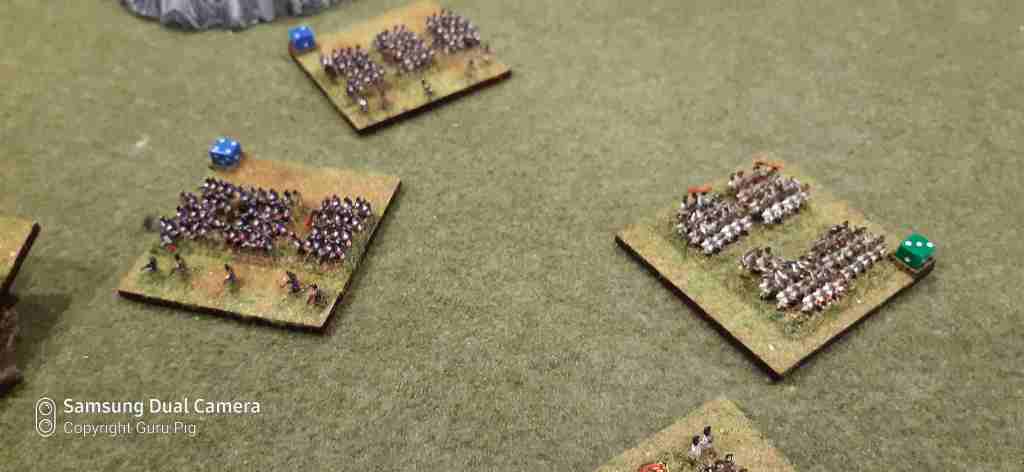
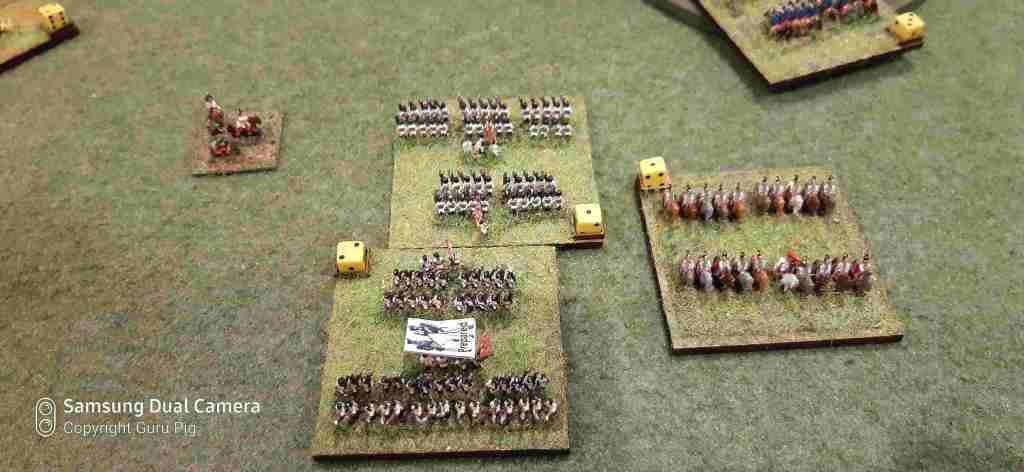
These have also been painted and on sticks for a long time but never based or flocked. As I might need them for some games in the near future I decided to fast track these ones as well. The fact that I was running out of painting sticks was also a strong motivator! They required a fair bit of touch up work but are now ready to go.
The Danish Jutland Regiment 3rd Battalion:
Vistula Polish Legion:
Hesse Damstadt Regiment:
First Berg Infantry Regiment:
Next another four more French Ally infantry units.
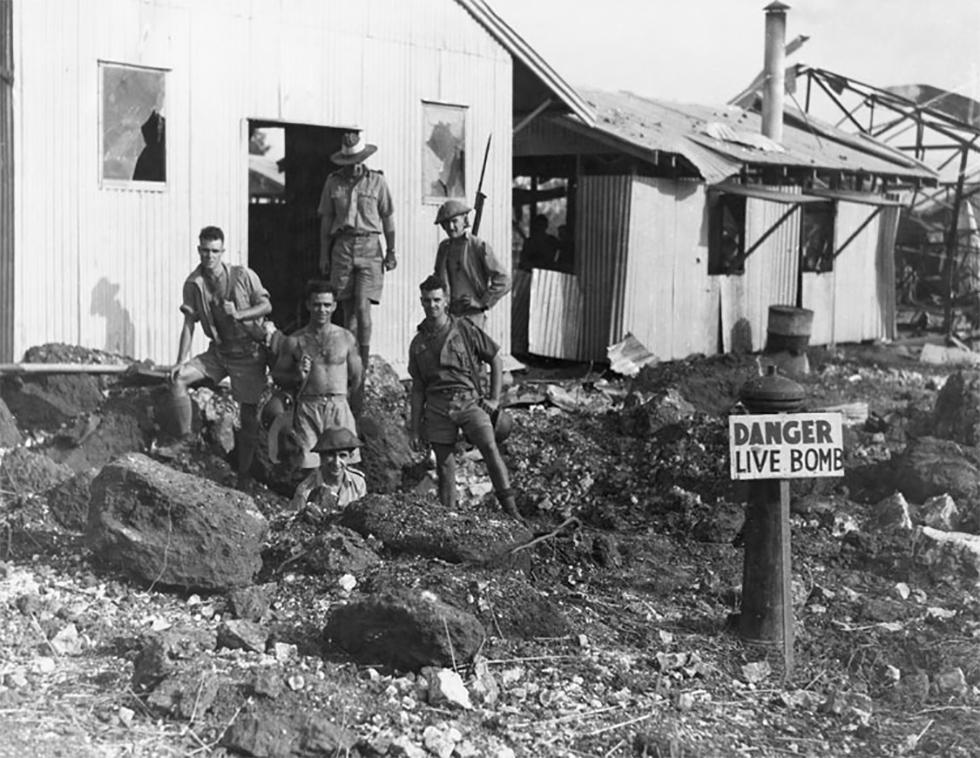
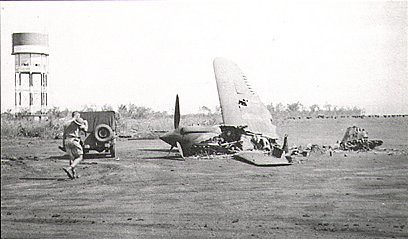
Eighty years ago today , 19 February , 1942— a date which will live in infamy— Australia was suddenly and deliberately attacked by the air and naval forces of the Empire of Japan.
The event is not taught in Australian schools and is ignored by politicians – this is THE infamy not the attack itself. Of course today, no doubt politicians from both sides will be in Darwin for the commemoration but only because it is an election year – there were none there last year!
To give you an idea of significant the event was, at Pearl Harbour there were about 400 bombs dropped to the 681 one at Darwin, and there were 21 ships sunk at Pearl Harbour (all but three of which were later repaired), compared to the eight sank and 15 damaged, at Darwin. I am NOT comparing one with the other (a comparison is futile and inappropriate), just trying to give readers an idea of the scale of the attack and the impact on Darwin itself and the nations psyche at the time. It should also not be forgotten that although this was Darwin’s first and most significant bombing raid there were 64 more to come!
There were many heroic acts on that day, but probably none more than that of Wilbert (Darkie) Hudson.
Darkie was in the shower at the time of the raid and grabbed only his tin hat, boots, and a towel, and ran for his machine gun.
As Japanese planes strafed the airfield, Darkie ran out into the open with another soldier, who was known as Tex. The pair propped the machine gun on Tex’s shoulder, allowing Darkie to shoot down a Japanese dive bomber.
“As the action got a little bit more intensive, Darkie lost his towel. So there was Darkie with his tin hat and boots going like hell”.
Wilbert ‘Darkie’ Hudson became the first Australian Army serviceman to be awarded a gallantry medal while fighting on the mainland of Australia.
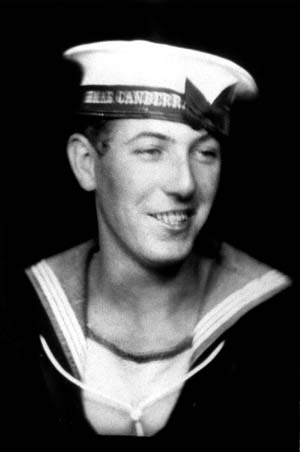
Another was During the attack, where the Kara Kara was singled out by several Japanese aircraft that commenced strafing the vessel. Fancis Emms manned one the vessels machine guns and returned fire and continued to do so even after he had been seriously wounded. His constant and accurate fire forced the Japanese aircraft to break off their attack and probably saved the lives of several of his shipmates.
Francis Emms was badly wounded as a result of the attack and despite being transferred to the hospital ship Manunda he died later that day and was buried at sea. He was subsequently awarded a posthumous mention in dispatches “For courage and devotion to duty in HMAS Kara Kara during an enemy air raid on Darwin on 19 February 1942”. Many of his shipmates believed he should have been awarded the Victoria Cross.
An attempt by his family to have the award granted posthumously failed, as the Defence Honours Awards and Appeals Tribunal rejected an application to award the medal, Australia’s highest military honour. Instead he was just posthumously mentioned in dispatches!
The cost of the two raids:
Australian
6 Hudsons destroyed on the ground 1 Hudson in hangar badly damaged 1 Wirraway badly damaged
American
8 P.40’s [Kittyhawks] destroyed in the air 2 P.40’s destroyed on the ground 1 B.24 LB-30A Liberator was destroyed on the ground 1 P.40 damaged in the air
Killed on ships
187
33rd Pursuit Squadron pilots
4
Australian Army
Unknown – sad but true
148th F.A., US Army
3
RAAF – at RAAF airfield
Unknown – also sad but true
Catalina aircrew (#2306)
1
Post Office
10 postal staff
Darwin Wharf
22
Civilians killed
25
The Japanese had no firm plans for the invasion of Australia. The bombing of Darwin, 80 years ago today, was part of a strategic plan to deny the Allies a base for interfering with Japan’s invasion of Timor and Java. All the attacks on Australia’s north were aimed at weakening the Allied capacity to strike at the Japanese. But nobody knew then what the Japanese had in mind.
We all thought they were coming for us!
Australian Army Headquarters had issued a set of orders to the 43rd Battalion, stationed in Darwin, ”in preparation for the anticipated landing by Japanese forces”. On February 3, 1942, Eastern Command headquarters had issued a signal there were strong indications there might be ”enemy aircraft carrier operations” on the ”North East Coast of Australia”. Just before the raid, USS Peary had a ”possible encounter” with a Japanese submarine off Darwin.
Although Darwin’s defences had been upgraded, they were far from adequate. There were not enough anti-aircraft (AA) guns and machine guns, and training had been reduced because of ammunition shortages.
It was later concluded there should have been more than twice the number of AA guns to fend off a large attack. The operational RAAF squadrons were overseas. Darwin had a variety of planes, including Kittyhawks from the 33rd US Pursuit Squadron. But the RAAF had little more than obsolete or lightly armed patrol aircraft and a radar installation that was not operational.
There has always been a cloud over the defence personnel. Though the rank-and-file servicemen were no different from anywhere else, it has been claimed some of the army officers were there because nobody else wanted them. The posting lacked the romance and adventure that might have been felt being dispatched overseas. It was a hot, sticky, tropical outpost with serious morale problems and fear, especially as Darwin’s population of about 5800 had been reduced by the evacuation of 2000 women and children.
THE attack on Darwin began when 175 Japanese planes, including Zeros and torpedo bombers, left four carriers in the Timor Sea at 8.45am, shooting down two US planes they encountered on the way. What little chance the defence forces had to prepare was marred by complacency.
There were two warnings, from a coast-watcher on Melville Island at 9.15 and from a Catholic missionary on Bathurst Island. At 9.37, Father John McGrath radioed that an ”unusually large air formation” was bearing down from the north-west. The officer receiving the calls assumed – like his counterpart at Pearl Harbour the previous December – that he was being told about friendly aircraft, in the Darwin case either a flight of 10 Kittyhawks, or LB-30 Liberators that had just left.
The alarm was not sounded. The late Zelman Cowen, a junior naval intelligence officer in Darwin at the time (later Australian Governor General), said: ”If you had had a small warning, you might have had a better opportunity for ships to be under way and not stationary.”
The Japanese commander, Mitsuo Fuchida, who led the attack on Pearl Harbour, was unimpressed by Darwin. ”It was hardly worthy of us,” he wrote later. ”If ever a sledgehammer was used to crack an egg, it was then.”
The air raid siren started at 9.58 when the bombs were already falling. The Japanese attacked the harbour, an oil depot, the post office, the hospital and army barracks. The 10 Kittyhawks from Darwin had flown to Java but had turned back. Five, approaching the base, engaged the Japanese; four were shot down. The five that had already landed were destroyed on the ground or just after becoming airborne.
The air defence of Darwin was left to AA batteries, which succeeded in downing one aircraft. In the harbour eight ships were sunk and three more in open ocean.
Albert March, 20, had hunkered down with a rifle in the suburb of Winnellie. The Japanese were so cocky, he said they waved to soldiers on the ground. ”One pilot even did stunts in the air before leaving,” he said. ”We were all inexperienced and so scared. I was young, only had six weeks’ training, and had just arrived in Darwin.”
The impact on the Australian population and the politicians was immense. The majority of Australian forces were returned to Australia to defend their homeland, including the “Fighting” 9th division, the Rats of Tobruk, against British wishes.
Australians volunteered in droves, including my Grandfather following the raids.
We celebrate the achievement of Federation, we commemorate Gallipoli, yet the bombing of Darwin was an equally significant event in Australia’s history. These events changed our history forever. It was a major event in Australian history, and yet so few people know about it.
3 More British Units touched up, repaired and re-based. Fortunately other than the basing not much was required. All of the flags needed to be re-attached but not much more.
3 More British Regiments touched up, repaired and based (42nd Black Watch, Foot Guard in busby, 1 KGL Light Regiment). These ones required a bit of repairs and a lot of painting over the many chips. In particular the highland tartan on the Black Watch was very average so I decided to give it a repaint.
The 42nd Black Watch
Close up of repainted tartan.
King’s German Legion 1st Light Infantry Regiment:
Basically the only discernible difference from the 95th Rifles in 28mm is the trousers are light grey instead of green (and of course there is no “Flashman”!).
But here he is:
“Flashman was painted by Geoff Frost aeons ago for a Charge of the Light Brigade participation game in 54mm scale, using Tennyson’s poem as the movement and activation mechanism. The model was kindly given to me by Geoff following the convention and has been part of my collection ever since. All of the figures were painted in that “Britain’s” style including bright green base. Thanks Geoff.
British Guard unit in Busby:
I am not sure if the busby was ever used during campaign, but that is how “minifigs” produced them back when I first started and I didn’t know any better. Some may say that this has not changed. I would agree with them as Caliver books still sell them. Ha ha!
Next post will be some more infantry that fortunately needed far less work to rejuvenate!
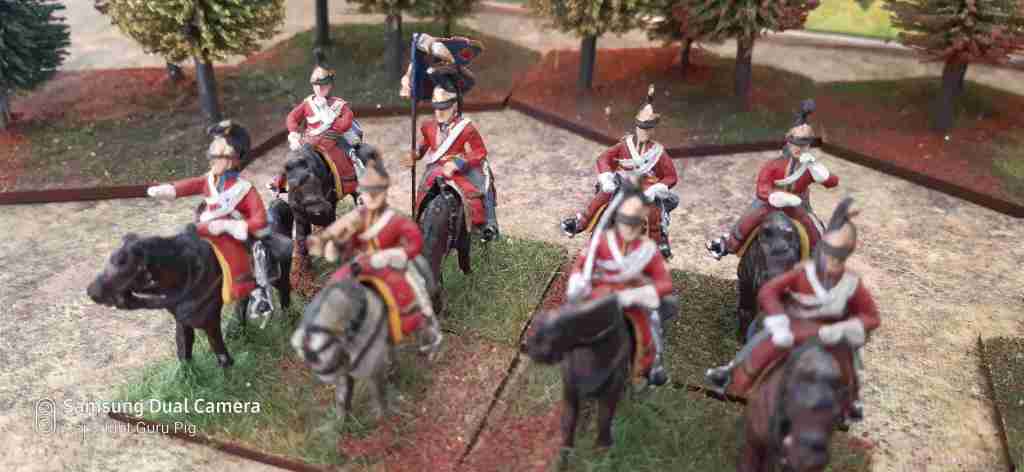
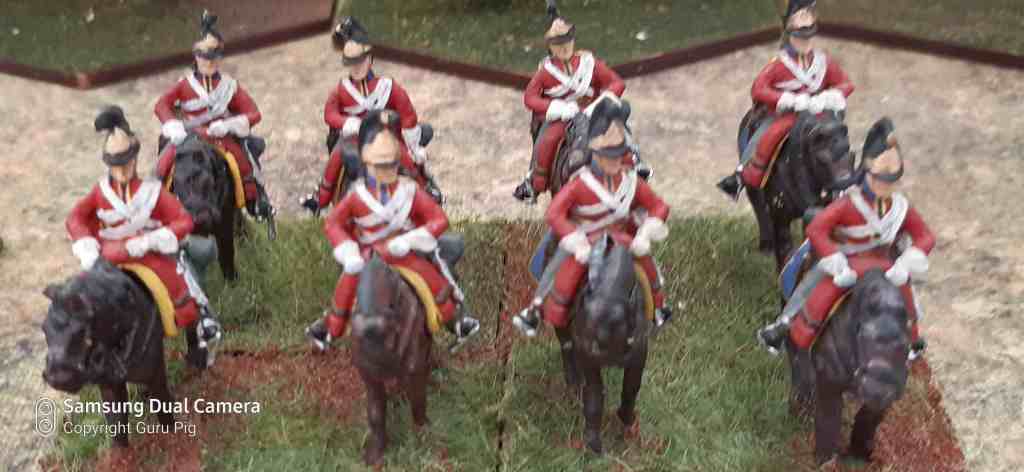
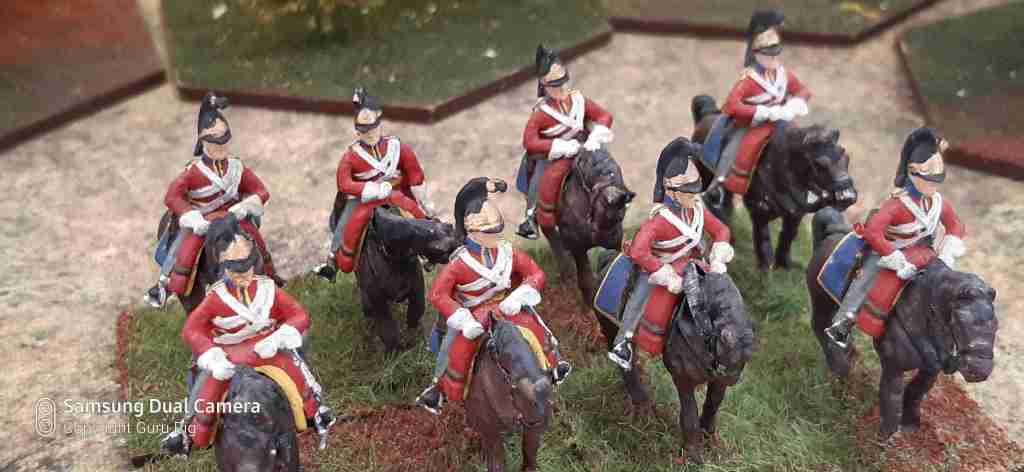
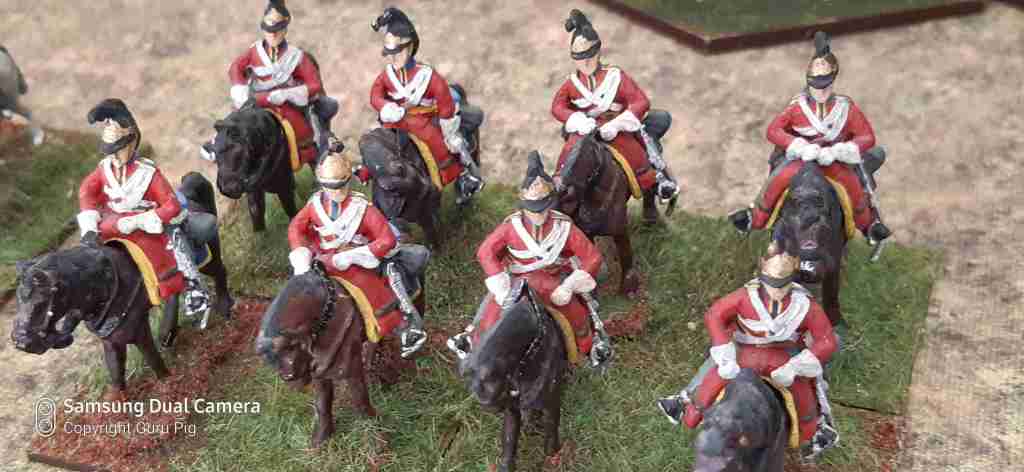
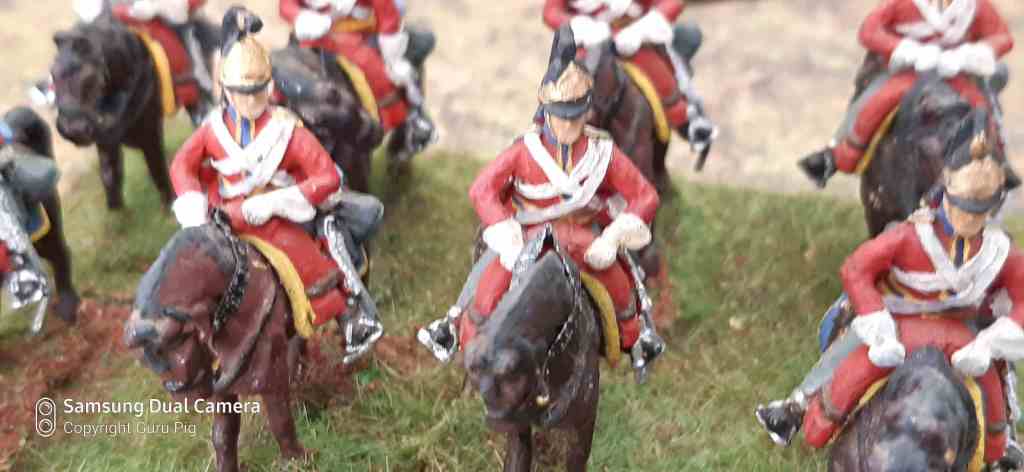
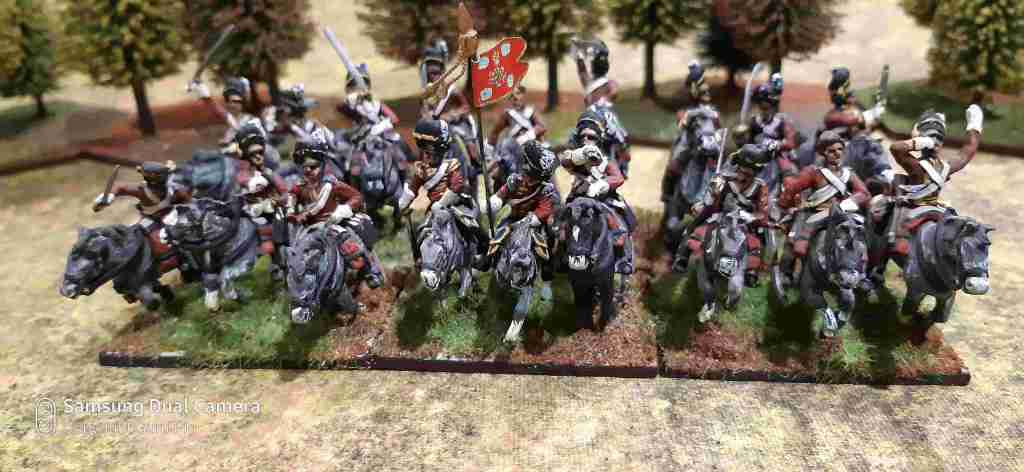
As the brigade consisted of regiments from England, Scotland, and Ireland, it was known as the 2nd (Union) Cavalry Brigade:
1st (Royal) Regiment of Dragoons
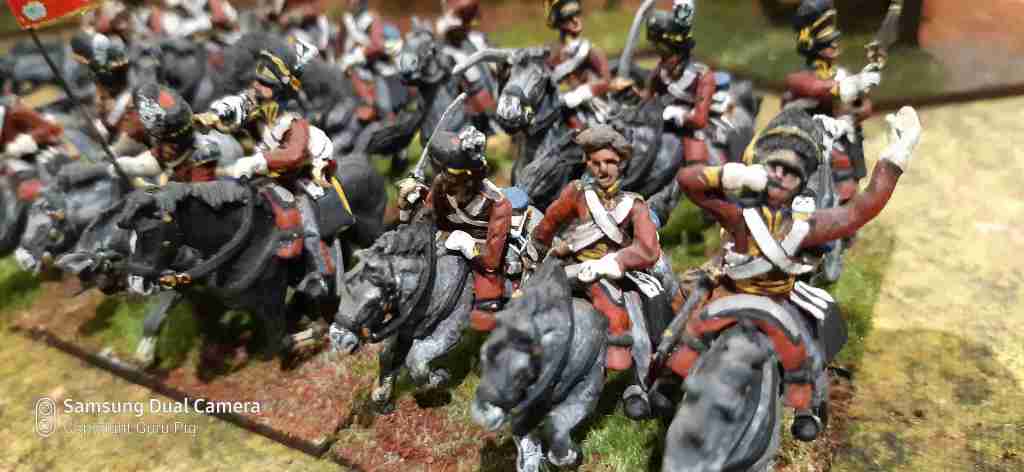
2nd Regiment of Dragoons (Royal Scots Greys)
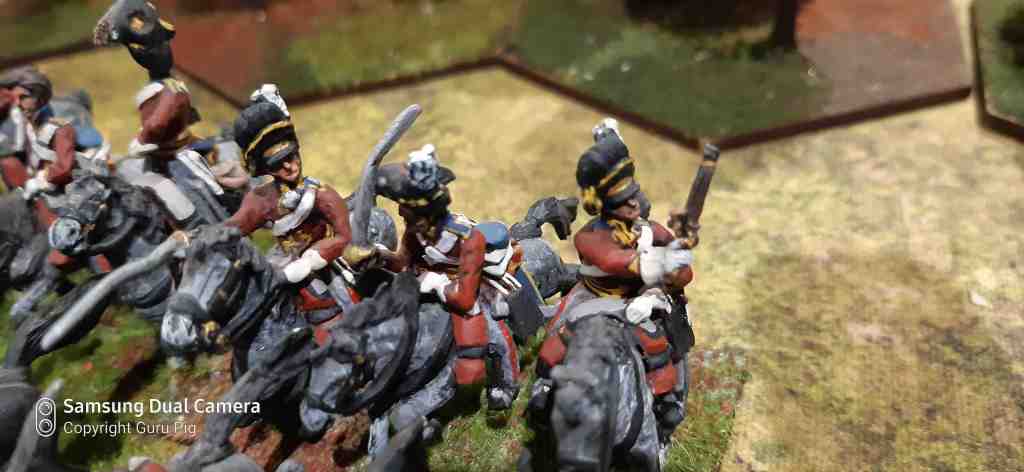
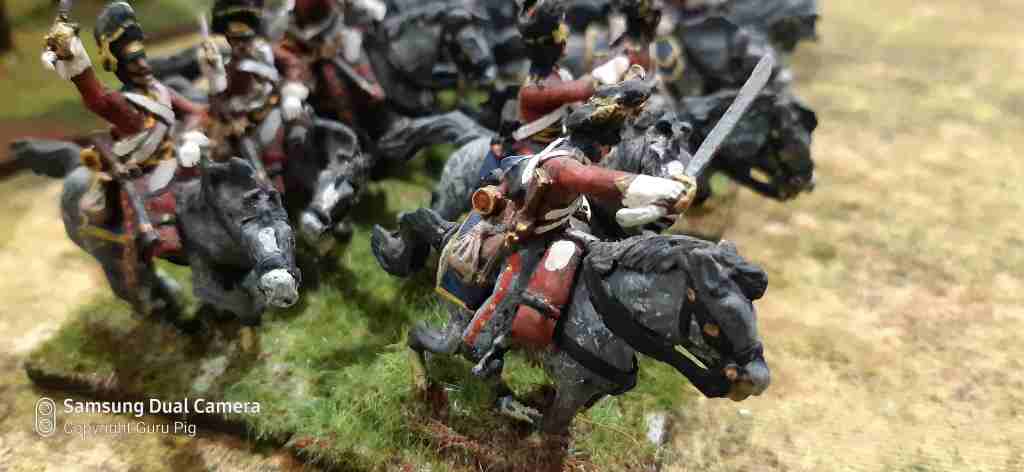
6th Regiment of Dragoons (Inniskilling)
All were clad in red, and rode particularly large and impressive horses.
During the Hundred Days campaign of 1815, it was the 2nd British heavy cavalry brigade – that smashed the enormous attack columns of d’Erlon’s corps in the opening moves at Waterloo, putting to flight, and capturing or killing thousands of French infantry.
Not content with such a feat they continued on to harry the French gun line before becoming blown, over-extended and driven back with staggering casualties by vengeful French horse.
1st (Royal) Regiment of Dragoons
1st (Royal) Regiment of Dragoons
1st (Royal) Regiment of Dragoons
1st (Royal) Regiment of Dragoons
2nd Regiment of Dragoons (Royal Scots Greys)
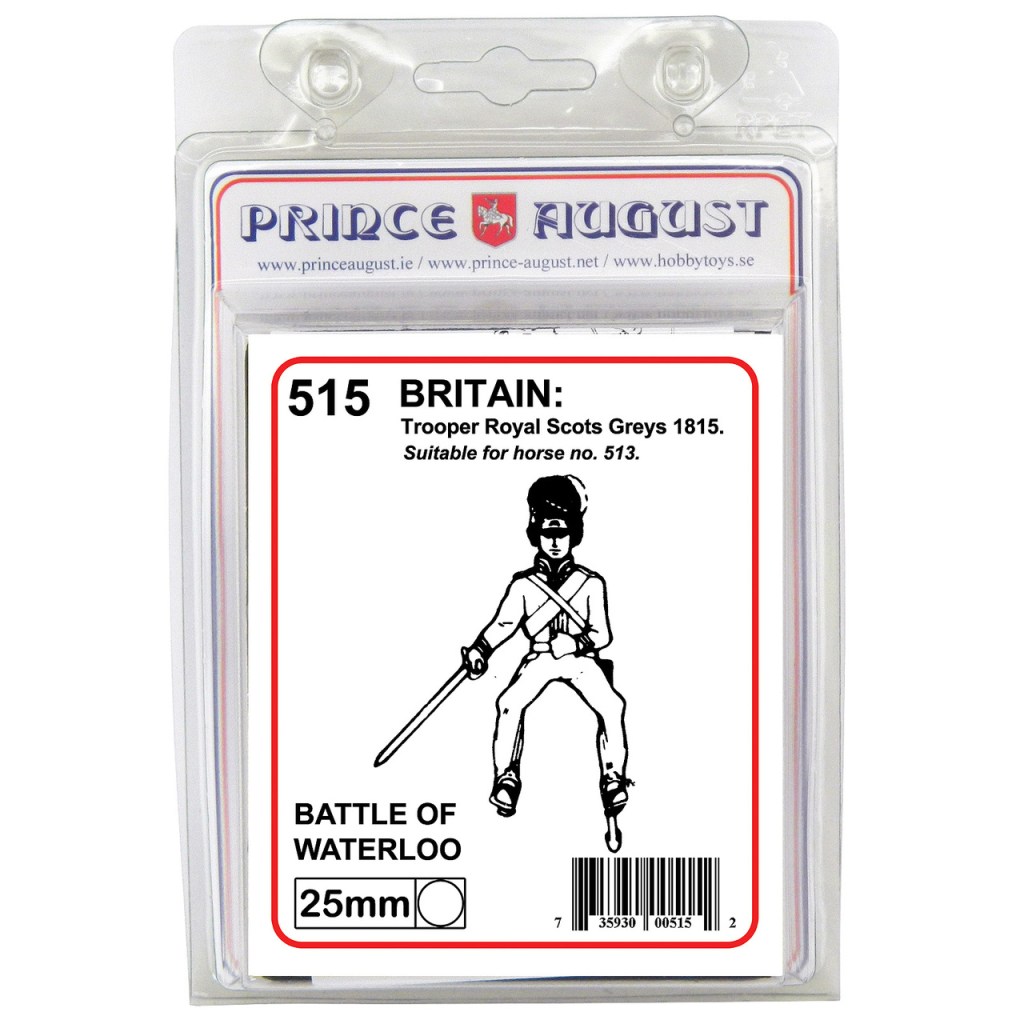
These are extremely old figures that were painted and moulded from Prinz August moulds in the late 70’s.
2nd Regiment of Dragoons (Royal Scots Greys)
2nd Regiment of Dragoons (Royal Scots Greys)
2nd Regiment of Dragoons (Royal Scots Greys)
6th Regiment of Dragoons (Inniskilling)
6th Regiment of Dragoons (Inniskilling)
6th Regiment of Dragoons (Inniskilling)
6th Regiment of Dragoons (Inniskilling)
6th Regiment of Dragoons (Inniskilling)
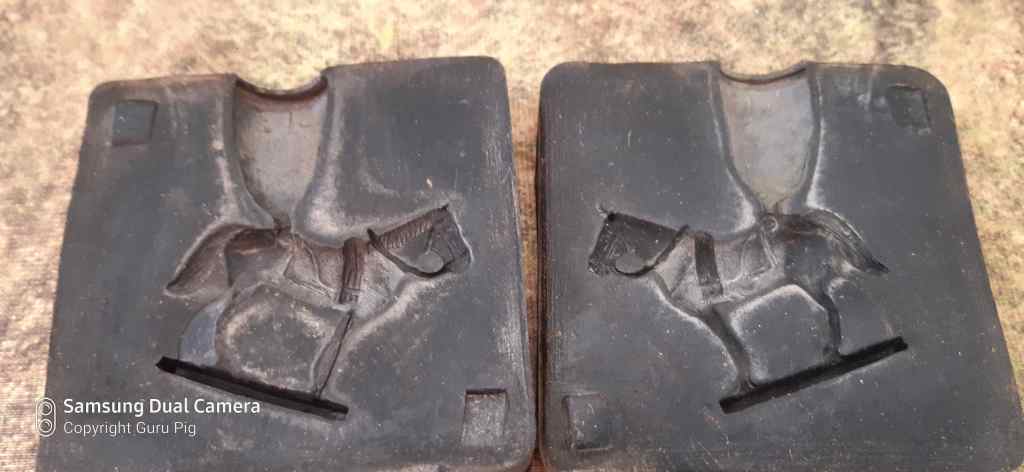
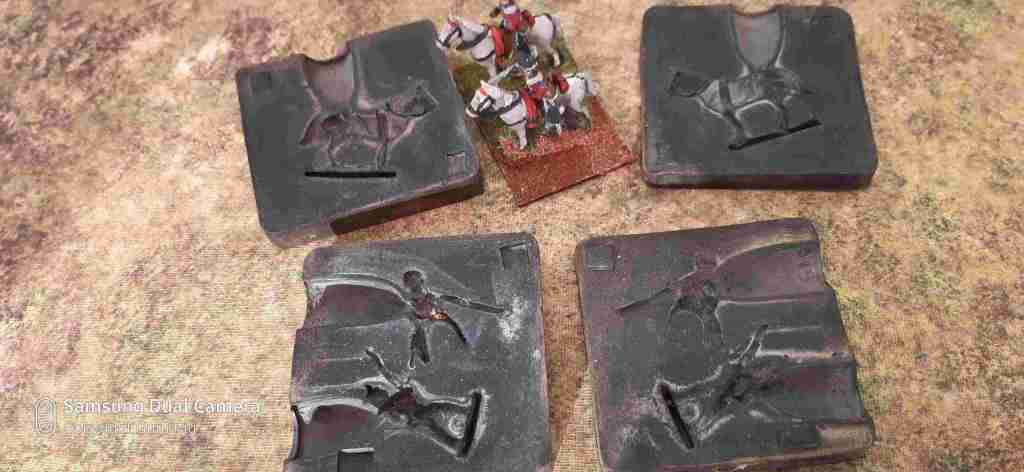
As I said above the Scots Greys were produced in the early 1970’s (I think, as you know what the say about the 70’s!) from Prinz August Moulds.
The horse mould
The Scots Greys cavalryman and a British Line Fusilier
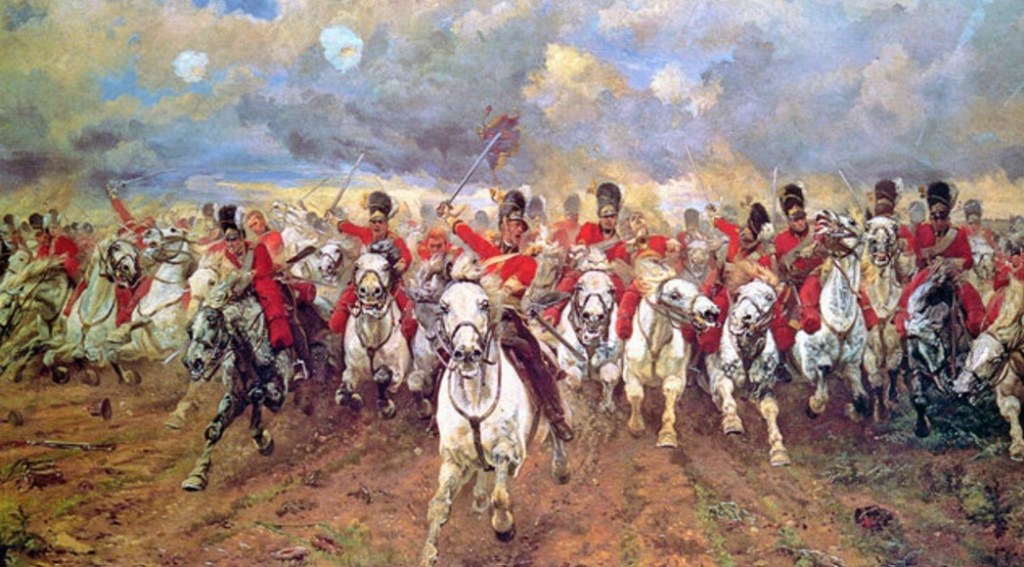
I also have a unit of “proper” Scots Greys!
Scotland Forever by Lady Butler
These look far more attractive than the other units because of the variety of poses and animation of the figures.
With the cavalry now done I need to touch up and re-base the infantry and artillery.
The other day I had my second game of Blucher thanks to Geoff F and Steve N. I am very impressed with the”feel” of moving a whole corps, and, as always, with Sam Mustafa’s rules, and how seamless the game flowed. The use of 6mm figures added to the visual impact of a large battle.
Johann Josef Cajetan Graf von Klenau, Freiherr von Janowitz (Czech: Jan hrabě z Klenové, svobodný pán z Janovic; 13 April 1758 – 6 October 1819) was a field marshal in the Habsburg army. Klenau, the son of a Bohemian noble, joined the Habsburg military as a teenager and fought in the War of Bavarian Succession against Prussia, Austria’s wars with the Ottoman Empire, the French Revolutionary Wars, and the Napoleonic Wars, in which he commanded a corps in several important battles. In the early years of the French Revolutionary Wars, Klenau distinguished himself at the Wissembourg lines, and led a battle-winning charge at Handschuhsheim in 1795.
The Austrian deployment shown after the first French move. The French need to capture the two villages on the Austrian flanks to achieve victory.
As commander of the Coalition’s left flank in the Adige campaign in northern Italy in 1799, Klenau was instrumental in isolating the French-held fortresses on the Po River by organizing and supporting a peasant uprising in the countryside. Afterward, Klenau became the youngest lieutenant field marshal in the history of the Habsburg military. As a corps commander, Klenau led key elements of the Austrian army in its victory at Aspern-Esslingen and its defeat at Wagram, where his troops covered the retreat of the main Austrian force.
The Austrian first Corps led by Klenau. From the left the Advance Guard, Foot Artillery and two Infantry brigades. You can just see the corner of one of two cavalry brigades.
He commanded the IV Corps at the 1813 Battle of Dresden and again at the Battle of Nations at Leipzig, where he prevented the French from outflanking the main Austrian force on the first day of the engagement. After the Battle of Nations, Klenau organized and implemented the successful Dresden blockade and negotiated the French capitulation there. In the 1814–15 campaign, he commanded the Corps Klenau of the Army of Italy. After the war in 1815, Klenau was appointed commanding general in Moravia and Silesia. He died in 1819. (en)
Klenau’s Corps defending the ridge line.
Austrian dragoons and Hungarian Insurrection cavalry support the infantry.
The Advance Guard and artillery threatening the French advance in the centre.
I like the way that the rules don’t allow the artillery to fire at full strength throughout the whole game representing the limited artillery supply of ammunition.
The Austrian reserve corp are deployed to hit the “hinge point” in the French centre.
You can see at the top of the picture one of the Austrian Cuirassier brigades charging a French Elite infantry brigade severely weakened by artillery fire. Two Grenadier brigades attack to their left, while horse artillery, dragoons and a second Cuirassier regiment provide support.
The Cuirassiers smash the French elite infantry brigade.
The grenadiers advance
The Austrians defending the forest are hit by French veteran troops.
The battlefield with all units now revealed.
The Austrians being pushed back from the ridge line.
You can see Klenau attached to an infantry brigade on the left. His personal bravery (and extra dice) repulsed a French attack.
French cavalry cause the victorious Austrian Cuirassiers to flee while the Austrian Grenadiers threaten the entire French line. The second Cuirassier unit is about to dispatch the French heavy artillery.
The dragoons move up to protect the Austrian flank.
The completely intact Austrian left holds firm
The Grenadiers poised to charge
Klenau rallying the Austrian right flank that has been mauled by the French cavalry and infantry.
Hungarian Insurrection cavalry about to receive cold steel.
The Austrian right just holds on (and I mean just) as the French centre is destroyed.
A close look at the above picture clearly shows the myopic nature of the French command (left) and their total reliance on artificial stimuli to cope with the rigors of command (right).
I don’t apologise for the completely biased report from the “Hapsburg Herald” journalist!
While the situation at the end of the game looks quite decisive there are 5 Austrian units just hanging on that allowed them to achieve victory. Command points for each unit are randomly determined each turn and the French had by far the worst of the “fickled finger of fate”.
A great game and I look forward to many more. This week some of my newly based British will take on my French army in a game of Lasalle.
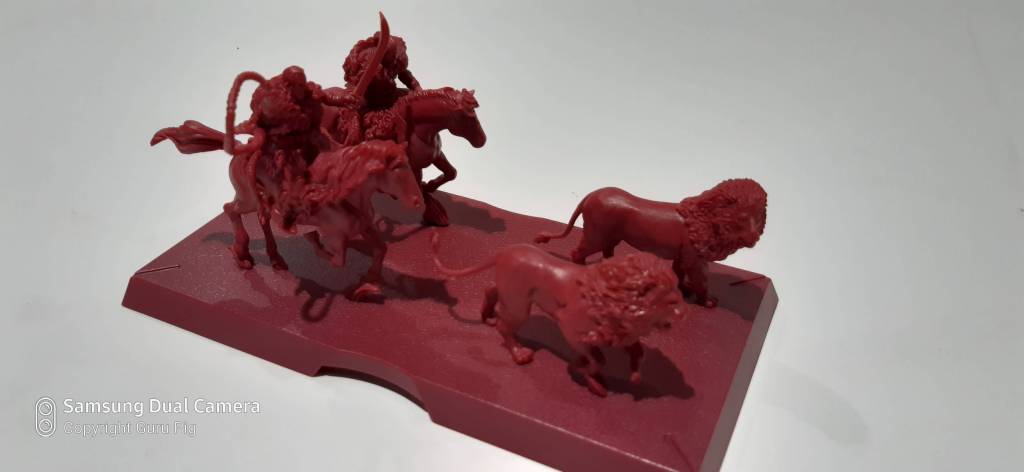
The formidable Hrakkars, or white lions from across the sea, are dangerous when out in their natural habitat. It takes great skill to kill one, but the true test of a khal is to actually subdue, capture, and tame one of these majestic beasts. If this mighty task is accomplished, the Dothraki gain a new weapon in war that is nearly unmatched in combat.
The models are up to the usual CMON standard.
Providing a cheap flanking option for your army, the Hrakkars act as a deployable “missile” that your opp onent is going to have to deal with or suffer the consequences. While they are pretty fragile, they can make excellent use of most of the Generic Tactics cards available and act as a deadly supplemental unit to your greater horde.
I also picked up the new set of Targaryen updated cards.
Alas two more models to paint but I cannot wait to see this army on the field.
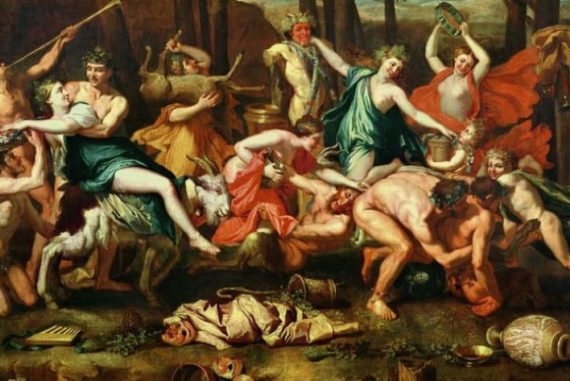
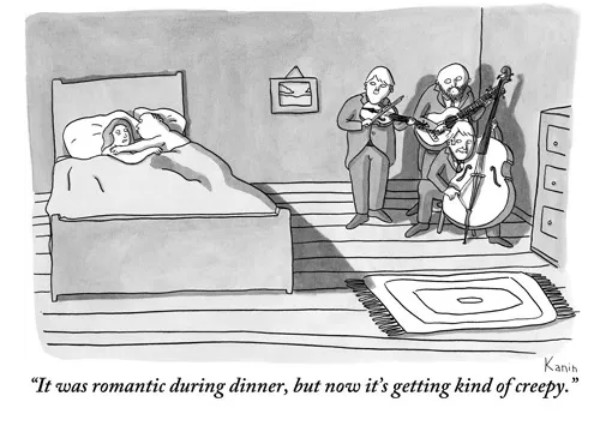
Valentine’s Day is when lovers express their affection with greetings and gifts. Given their similarities, it has been suggested that the holiday has origins in the Roman festival of Lupercalia, held in mid-February.
The festival, which celebrated the coming of spring, included fertility rites and the pairing off of women with men by lottery. Who said the good old days were all bad!
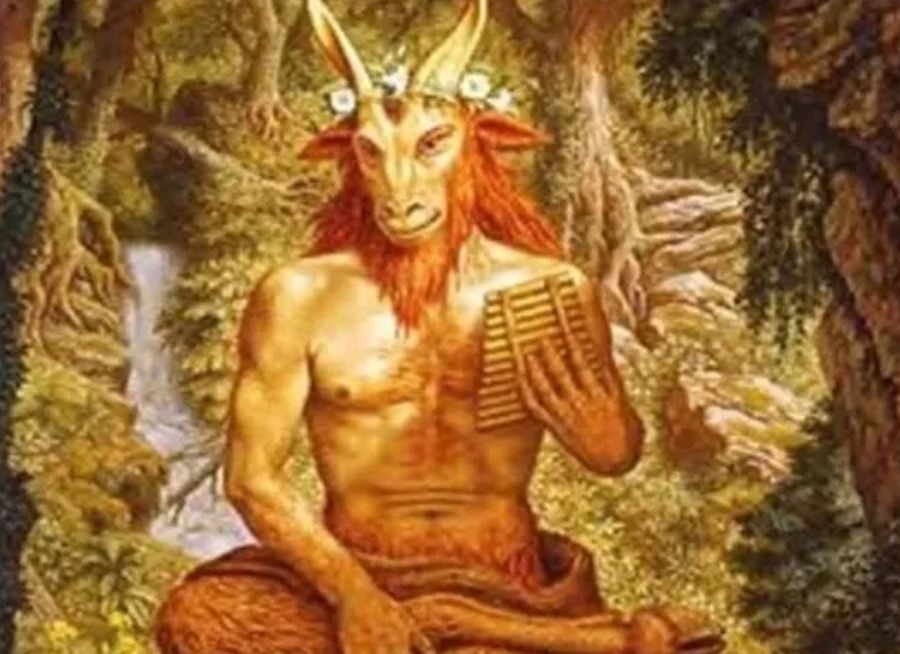
The name Lupercalia was believed in antiquity to evince some connection with the Ancient Greek festival of the Arcadian Lykaia, a wolf festival (Greek: λύκος, lýkos; Latin: lupus), and the worship of Lycaean Pan, assumed to be a Greek equivalent to Faunus, as instituted by Evander. Justin describes a cult image of “the Lycaean god, whom the Greeks call Pan and the Romans Lupercus,” as nude, save for a goatskin girdle. It stood in the Lupercal, the cave where tradition held that Romulus and Remus were suckled by the she-wolf (Lupa). The cave lay at the foot of the Palatine Hill, on which Romulus was said to have founded Rome.
Although there were several Christian martyrs named Valentine, the day may have taken its name from a priest who was martyred about 270 ce by the emperor Claudius II Gothicus. According to legend, the priest signed a letter “from your Valentine” to his jailer’s daughter, whom he had befriended and, by some accounts, healed from blindness. Other accounts hold that it was St. Valentine of Terni, a bishop, for whom the holiday was named, though it is possible the two saints were actually one person. Another common legend states that St. Valentine defied the emperor’s orders and secretly married couples to spare the husbands from war. It is for this reason that his feast day is associated with love.
At the end of the 5th century, Pope Gelasius 1 forbid the celebration of Lupercalia and is sometimes attributed with replacing it with St. Valentine’s Day, but the true origin of the holiday is vague at best. Valentine’s Day did not come to be celebrated as a day of romance until about the 14th century.
For me I just like the giving of flowers, chocolates and sweets, going out to dinner with my loved one and ……………hmmmmmm!
I hope you and your nearest and dearest have a great day!
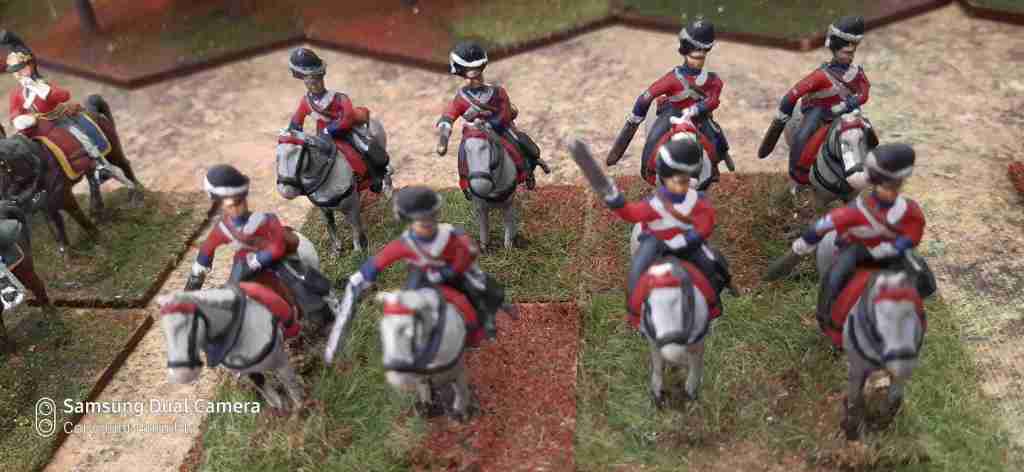
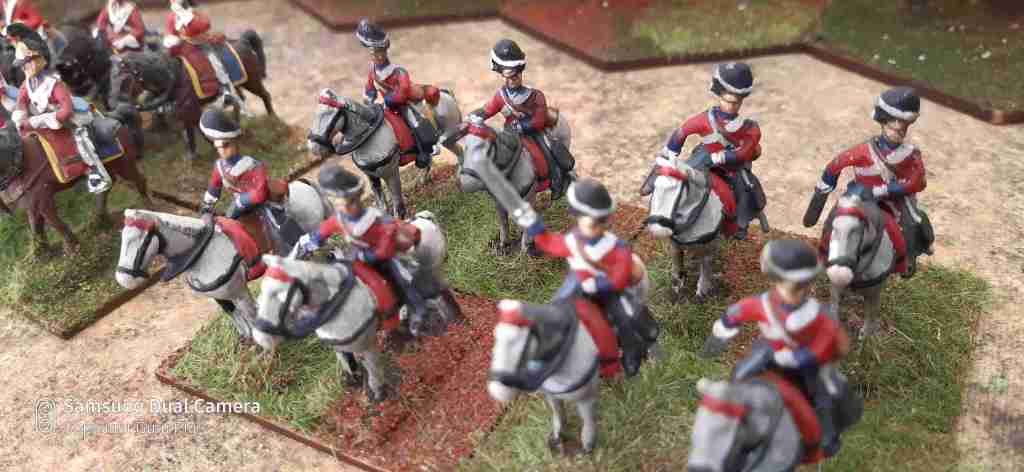
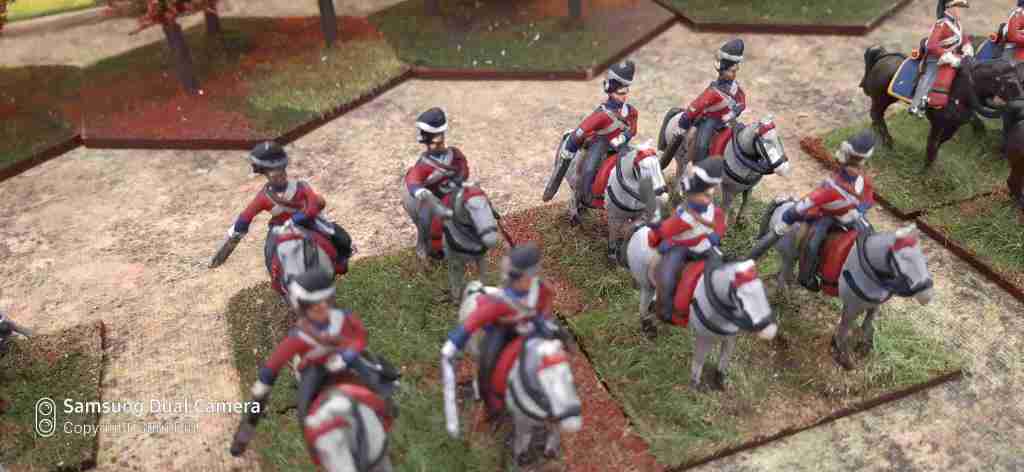
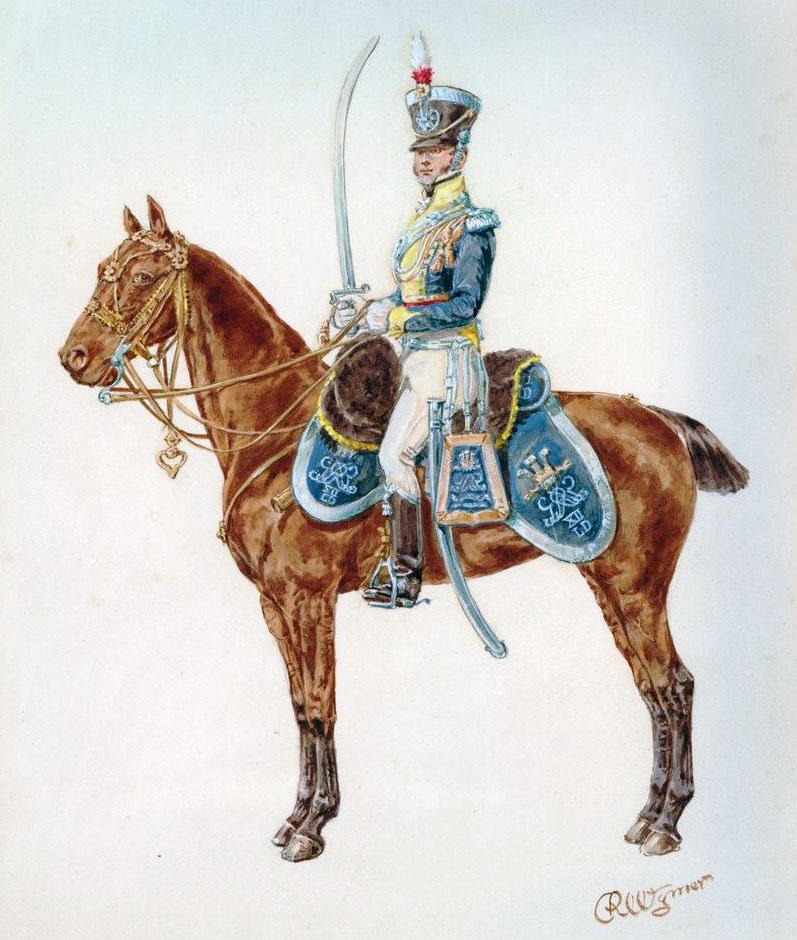
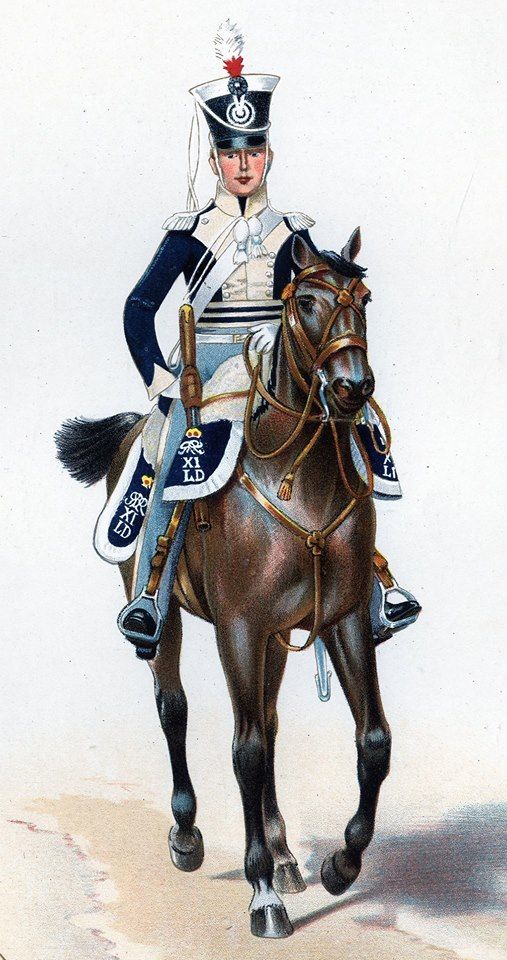
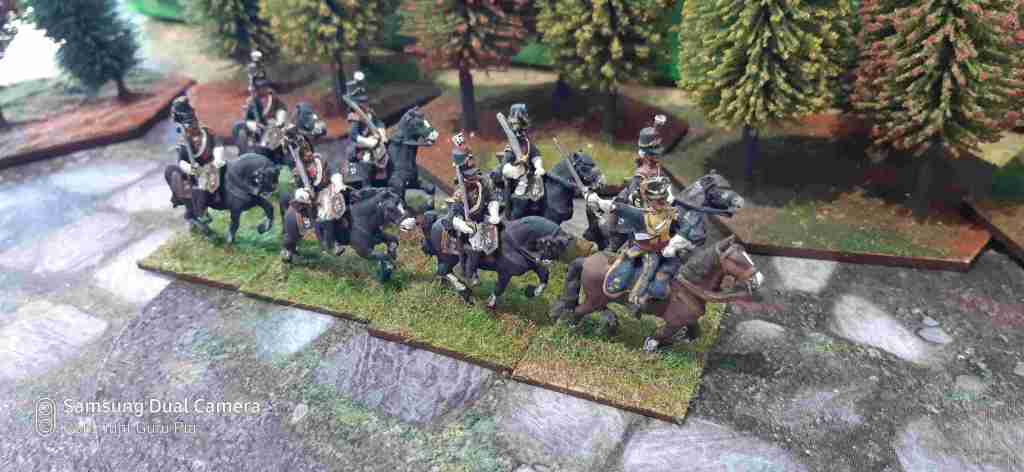
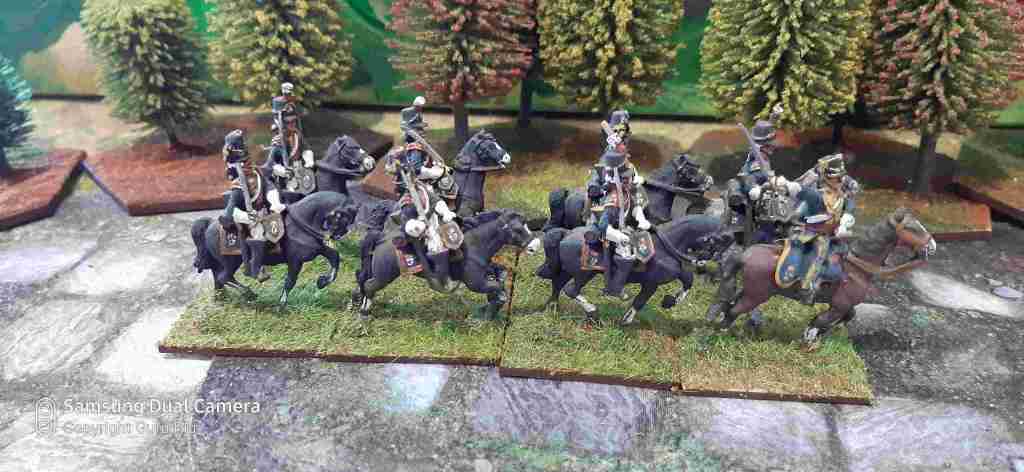
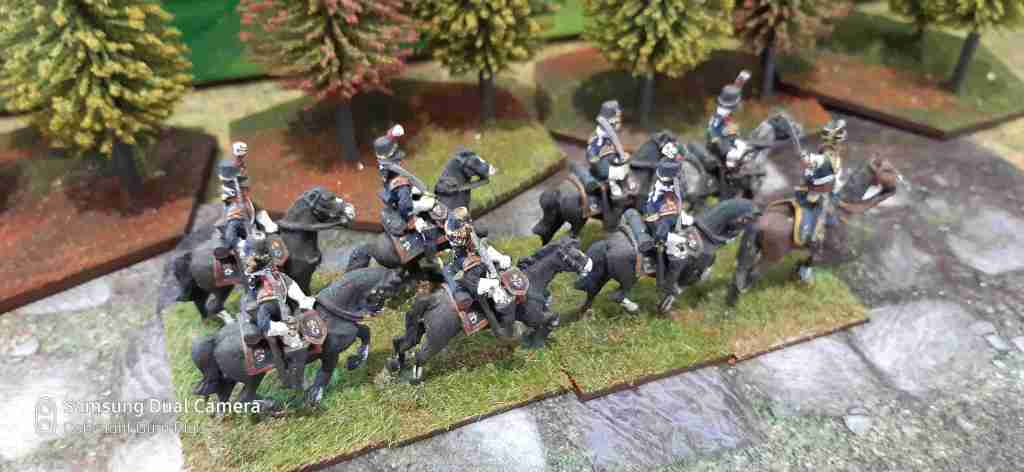
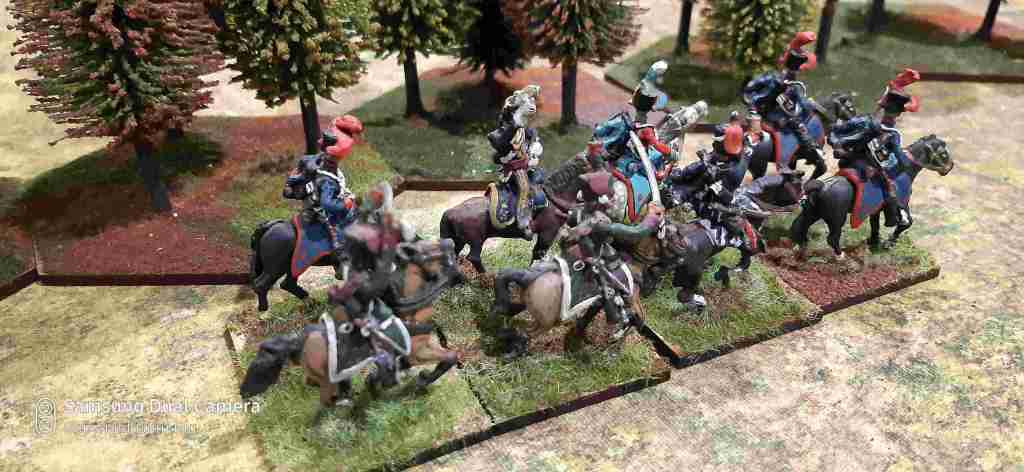
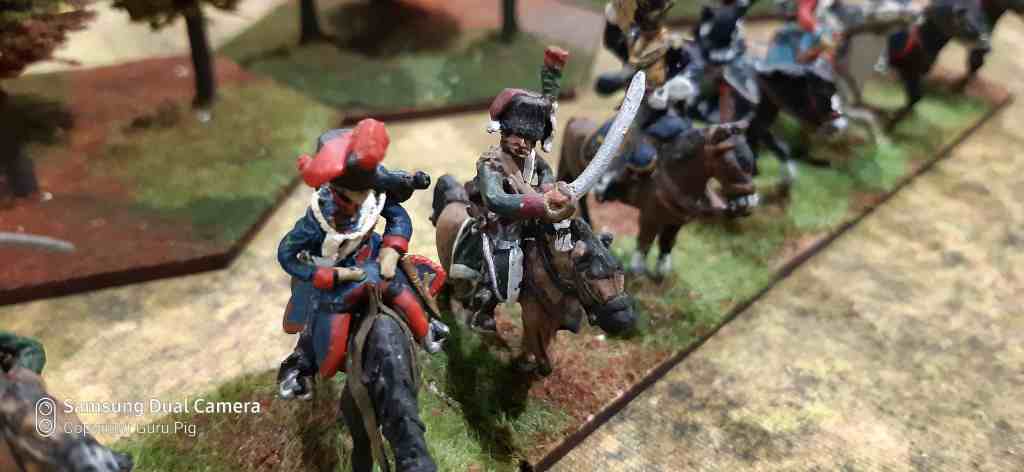
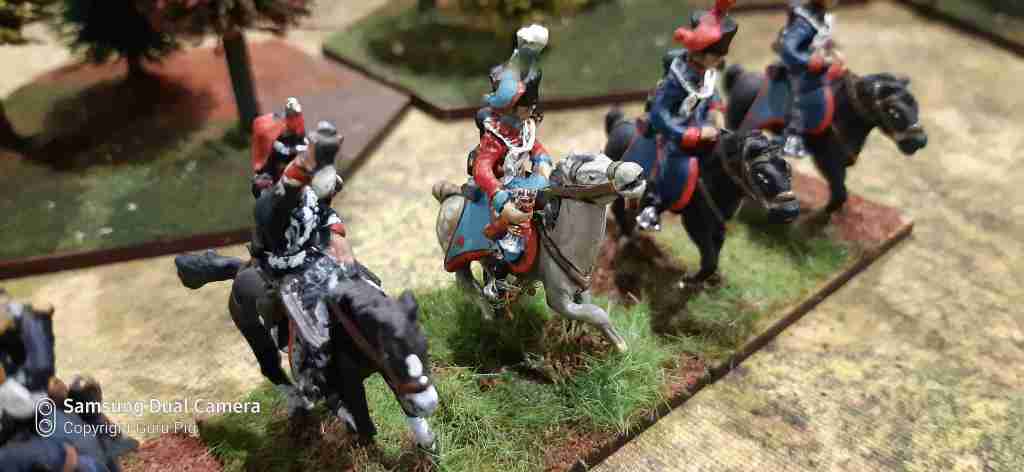
In 1812 the French-style shako was introduced for the light dragoons. It had a black-within-white frontal cockade, regimental loop and button, traditional white over red plume and top band and chin scales in the button colour.
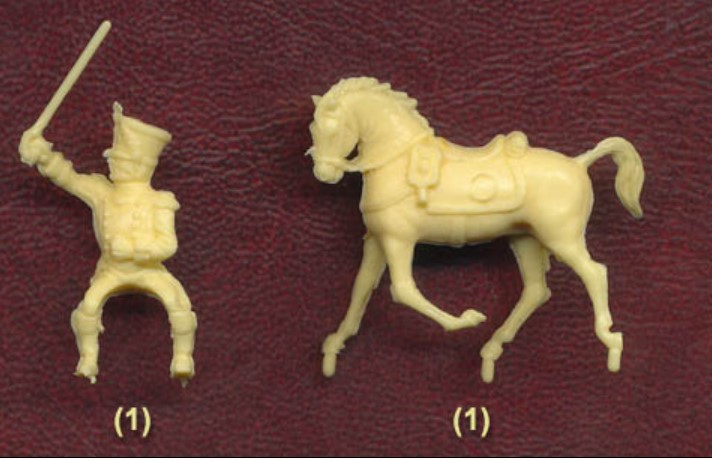
In fact, back in the dim dark ages, I remember using the Airfix French Infantry Officer as a British Light Dragoon. Unfortunately it took a large number of French infantry boxes to get a unit!
The tunics were also changed from a dolman to a short-skirted double-breasted tunic in dark blue with facings shown on the collar, lapels, cuffs, turnbacks and piping around the pocket. The tunic was in a completely lancer-style fashion with the coloured lapels folded back in imitation of Napoleon’s Polish Lancers.
The men even wore a waist belt or sash with two dark blue stripes on a backing colour, and in the small of the back they had the “waterfall” of the lancers. White breeches or grey overalls were worn on campaign with twin stripes in the facing colour
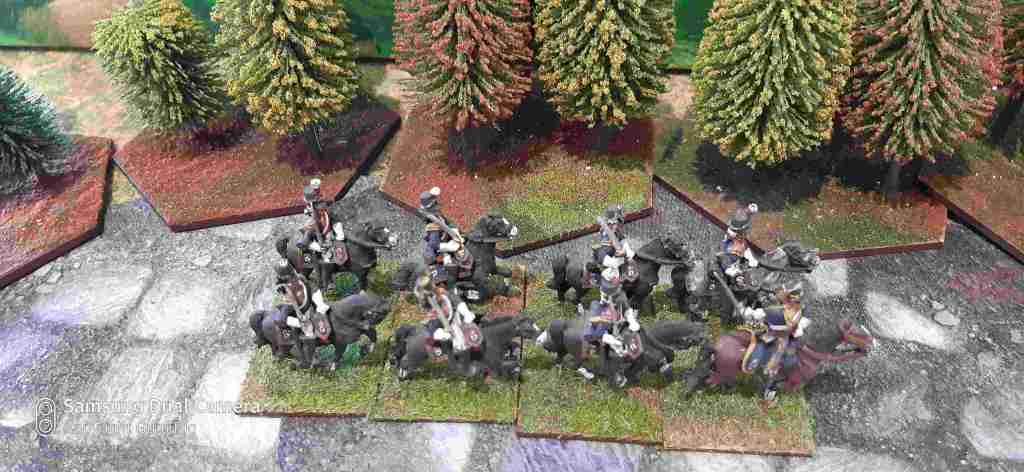
I also had a number of assorted painted hussars left over from who knows where but I put these together to form an adhoc unit. I really like some of the horse poses
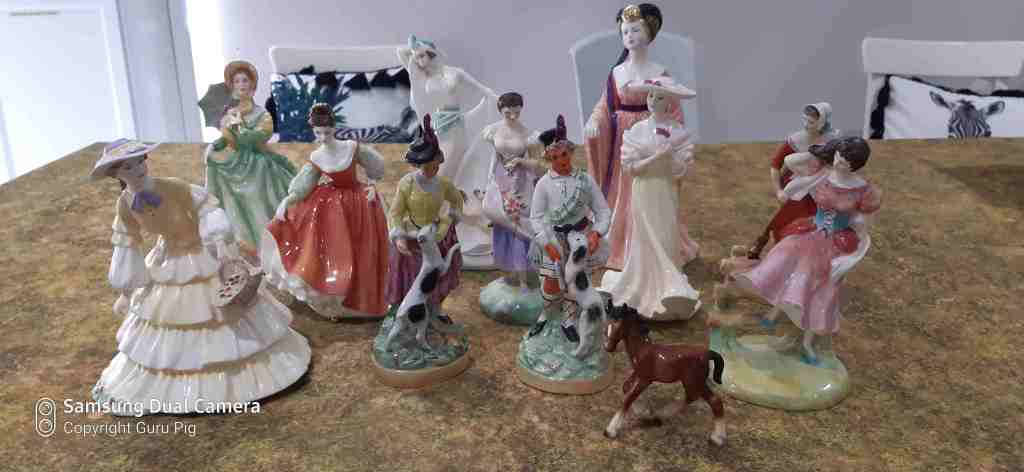
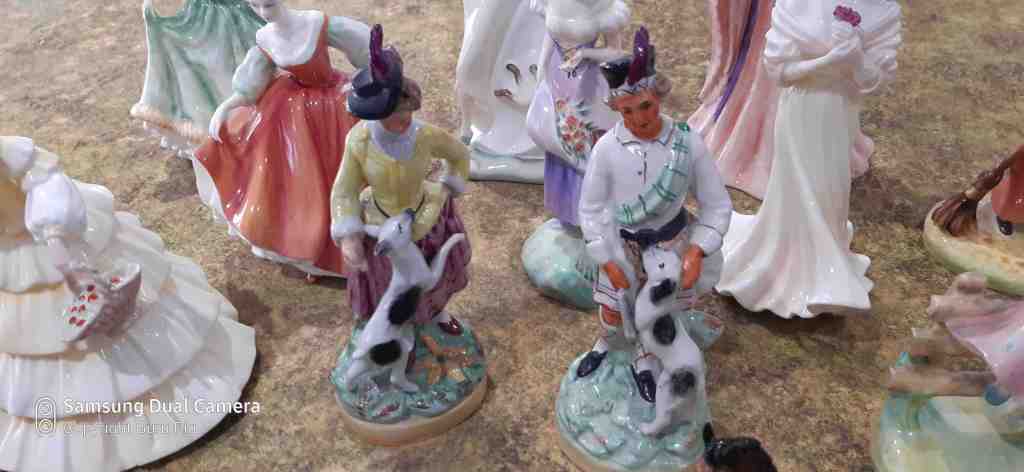
Went to the Waverley Antique Bazaar today which was a big mistake. They are moving location and most stalls had discounts of 50% or more. SWMBO made a killing on her collectibles but unfortunately this means the household hobby budget has blown out for the next few months.
Even the horse is too large!
I am waiting on a few orders to come through but there will be no new ones for a while.
Still Maree’s hobby is now a lot cheaper than when she was riding horses competitively.
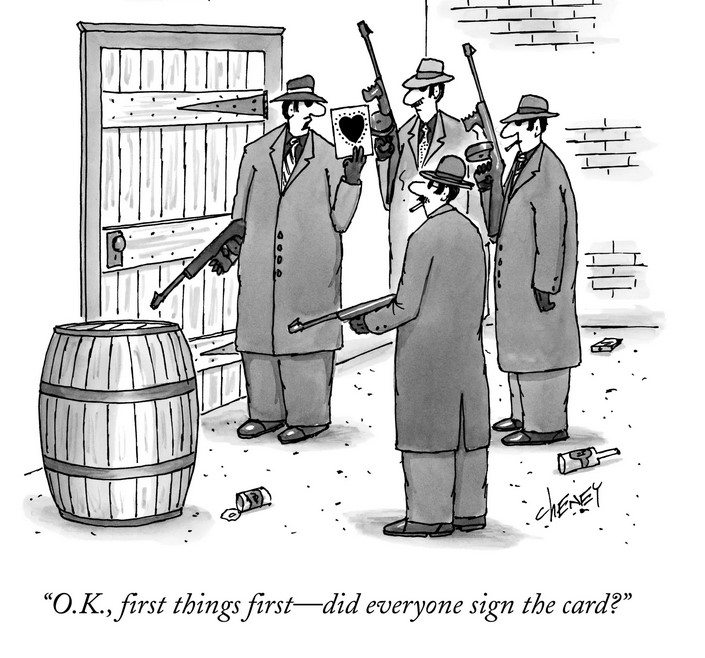
Still, tomorrow is Valentines day – just getting in early!!