Deadzone Enforcers

With so many agnostic figure Sci-Fi rules out there I thought it was about time I finished putting together my Deadzone Enforcers figures. In Deadzone they are the Corporate Police so can fit in with most rules systems. I plan on using them for Far Parsecs, Mars, F28 and Xenos Rampart.

The whole contingent

Striders or really big robot dudes (Tier 1 troops).

Like the action pose I was able to get with this one.

Big gun and chainsaw!

Pathfinder mono bikes (Tier 4 troops)

Pathfinder Jet Bikes (Tier 4 troops)

Peacemakers (Tier 2 Troops)

Assorted Pathfinders (Tier 4 troops). Front rank leader, medic, 2 MG’s and a Mechanic, Second row Infiltrators, 4th and 5th row basic troopers.

Robot dogs with lascannon

Enforcers (Tier 2 troops)

Close combat and “shooty” leader with shields

Medic

Mechanic

Enforcers with Flamers

Lascannons

Missile Launchers

Close Combat Enforcers

“Shooty Enforcers”

Peacemakers with shield – I will use these as heroes and leaders.

Peacemakers with Lascannons and leader

Assault Peacemakers with flamers

To make some of the specialists I had to kit bash a bit using Stargrave, Bolt Action, and Wargames Atlantic sprues. I will finish a few things on the painting desk and then I will start these in earnest.

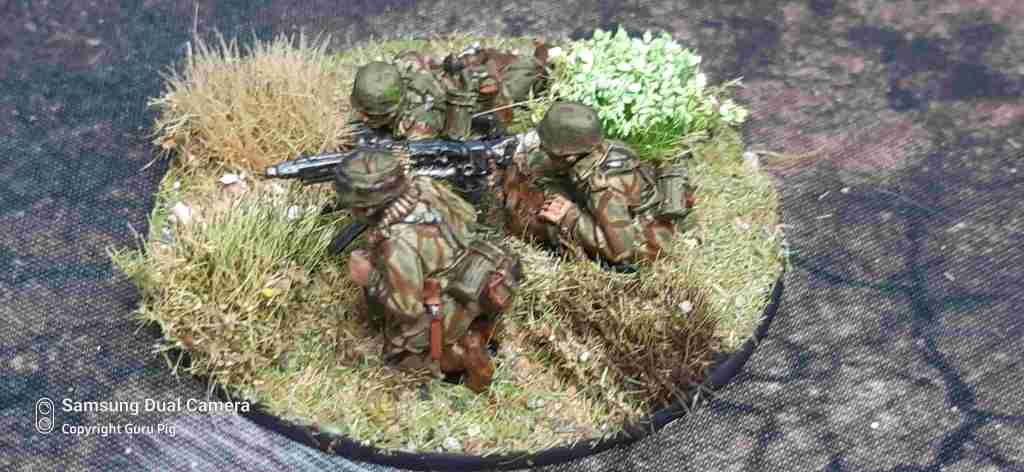
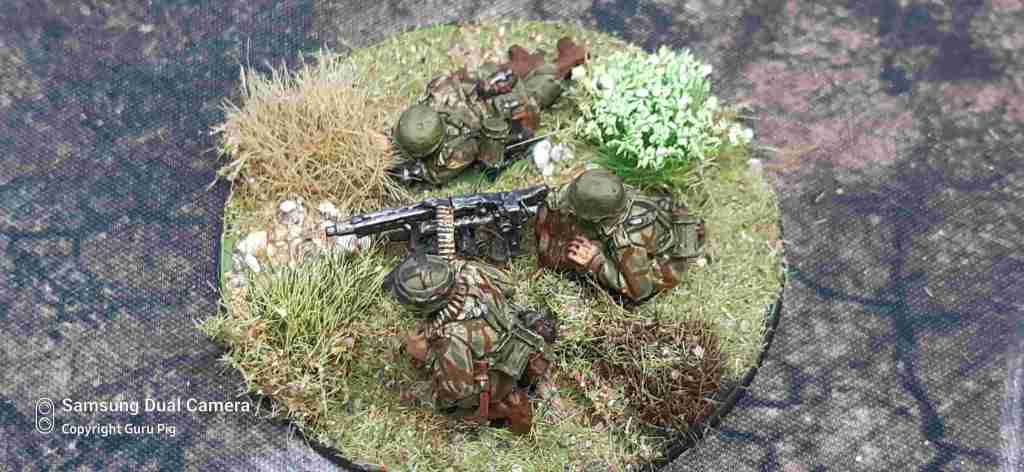
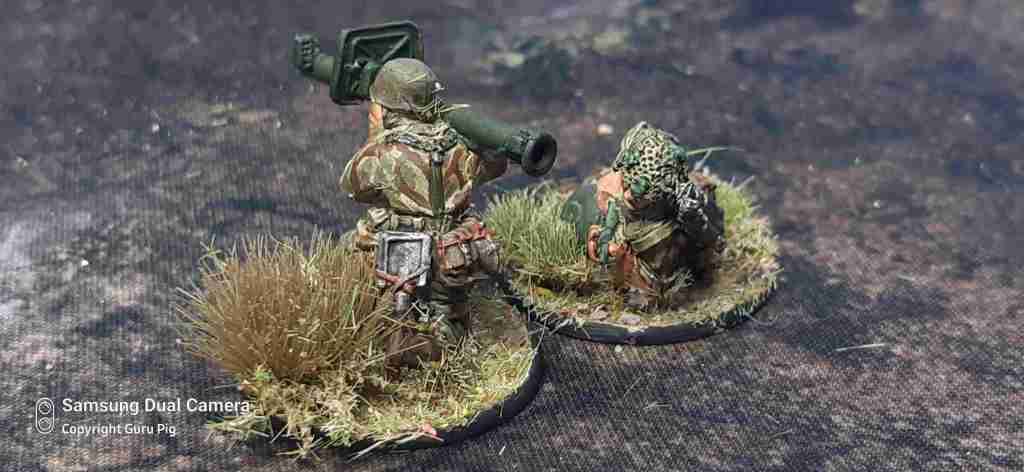
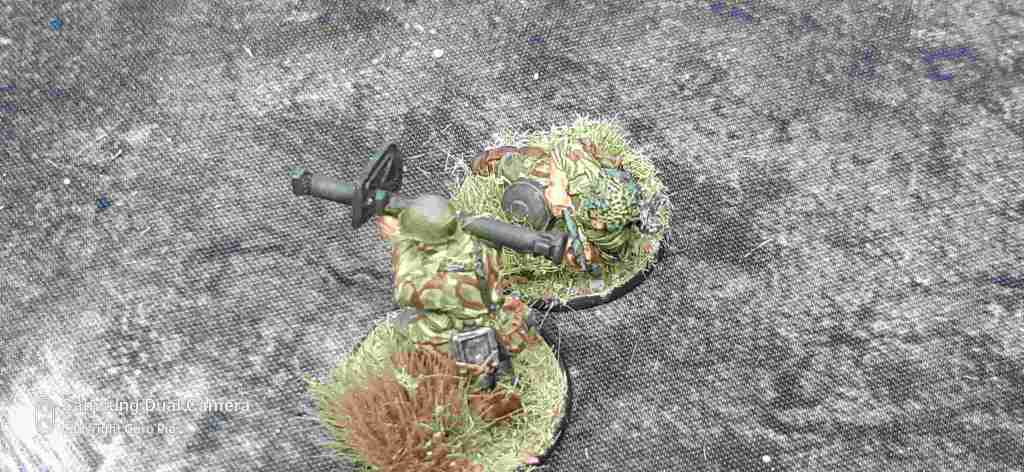
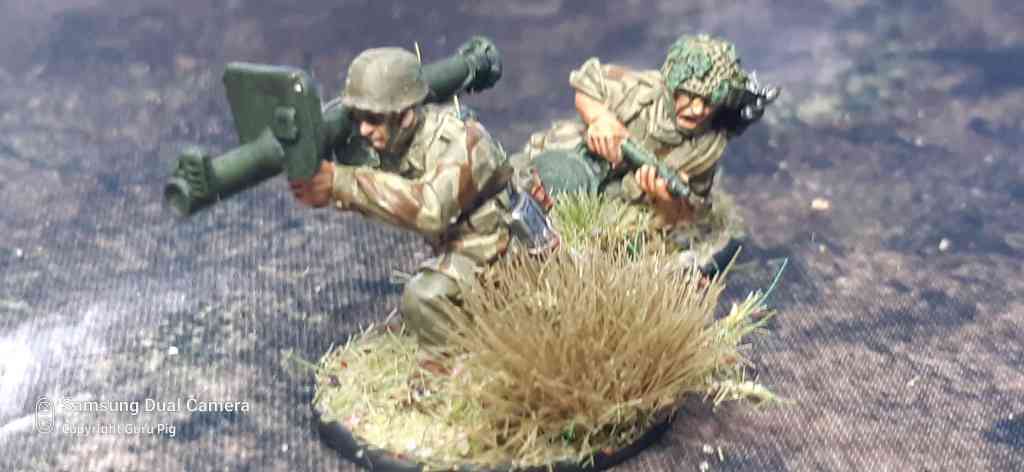
WW2 Fallschirmjaeger – Panzerbüchse 39 (Anti-Tank Rifle)

The Panzerbüchse 39 (German: Tank Rifle) was a single-shot anti-tank rifle developed in Germany that was first produced in 1939.

Developed from the earlier PzB 38, the weapon was the Wehrmacht’s standard infantry anti-tank weapon during the early portion of World War II. The weapon used a relatively narrow cartridge, a lengthened version of the standard 7.92mm rifle bullet, that could achieve a velocity high enough to penetrate up to 25mm of armour out to 300m distance.

While this was sufficient for disabling light vehicles, the increasing effectiveness of armour on Allied tanks throughout the war rendered the weapon mostly obsolete, leading to its official removal from service in 1944.

Statistics on the German Panzerbüchse 39 anti-tank rifle used in World War II.

Caliber: 7.92 mm

Action: Falling-block action

Cartridge: 7.92x94mm Patronen

Effective firing range: 300 m (330 yd) (for penetration of 25 mm armor)

Length: 1,620 / 1,280 mm (63.8 / 50.4 in) (folded for transport)

Muzzle velocity: 1210 m/s

Variants: Granatbüchse 39

The Panzerbüchse 38 and 39 were similar single-shot rifles, both built to fire the 7.92×94mm round. The improvements to the Panzerbüchse 38, an unwieldy 35-pound rifle, resulted in the lighter Panzerbüchse 39. Since the rifles were single-shot, two 10-shot cases were carried next to the breech to allow shooters to more quickly reload.

Regardless, both rifles lacked sufficient penetrating power, even with improved tungsten-carbide ammunition. Their shortcomings evident, the rifles were reassigned rifle grenade duty.

In this capacity, the rifles could fire anti-personnel and both light and heavy anti-armor grenades using a purpose-built wooden bullet.

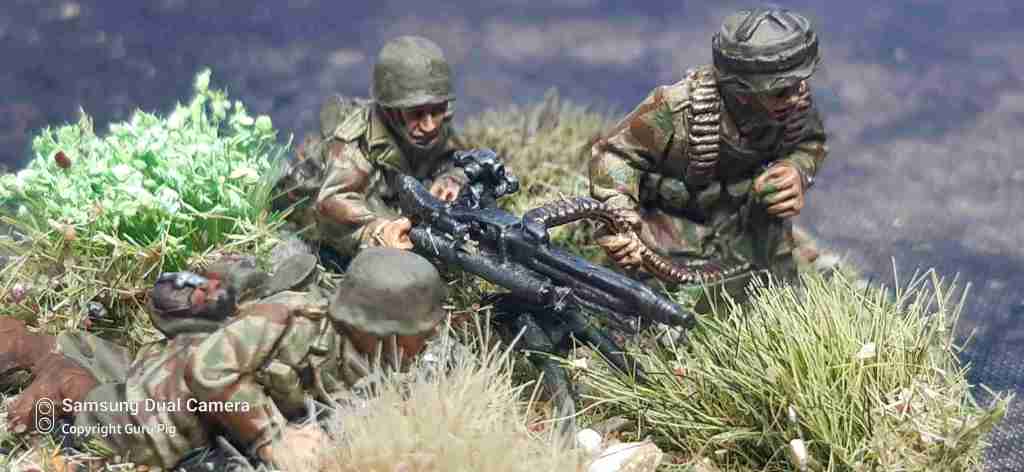
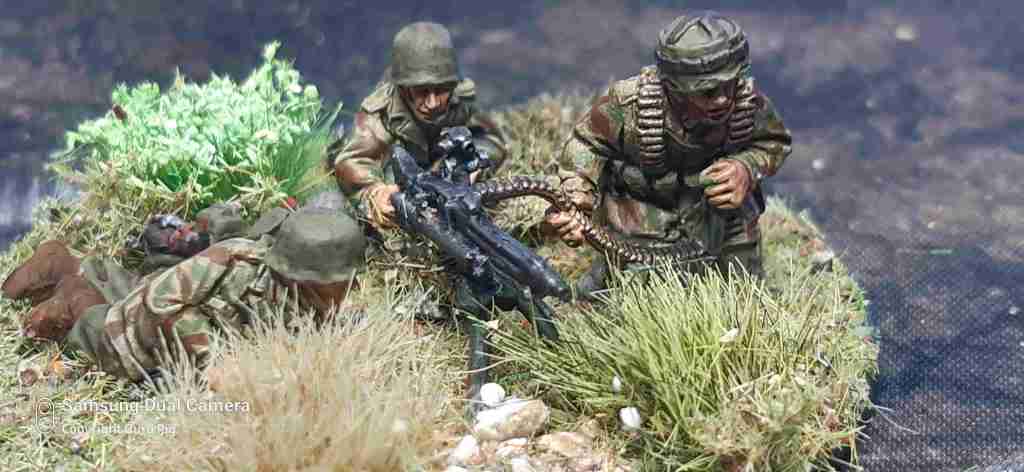
More Fallschirmjaeger to come!

Xenos Rampant Game – 8th of August 2023

We tried our first game of Xenos Rampart the other night and had a ball! It was good to start playing some Dan Mersey rules again. A real advantage of “xenos” is that it is figure agnostic – just use what you have.

The post in not really a batrep as we were just trying out the rules – more of a showcase of the rules and their agnostic nature.

These are Deadzone “plague leapers” used as lesser xenomorphs.

The lizard centre moves to attack

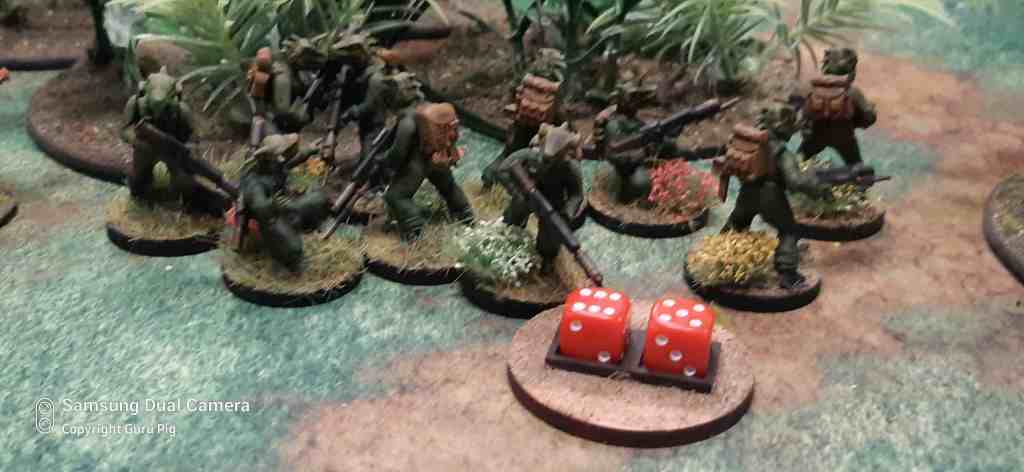
These figures are a mish mash of toy crocodiles, Stargrave miniatures with Wargames Atlantic lizard heads.

More of the Lizard centre

The Plague general moves forward

Lizard Light Infantry move to some jungle overlooking the centre of the table.

On the left primitive lizards and a large xenomorph move forward.

Lesser xenomorphs attack the lizard centre.

The threatened Plague right flank.

Primitive lizard infantry

The centre of the battlefield. The crocodiles (lesser xenomoirphs) in the centre jungle piece kept on charging the plague lesser xenomorphs but kept on being “bounced”.

Lizard scouts protect the flank of their light infantry in the jungle.

Plague zombies move up behind their centre

The Lizard general and his retinue of elite troops hold of three successive charges.

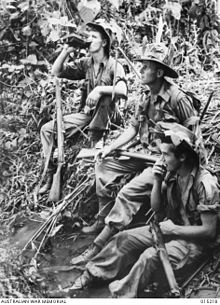
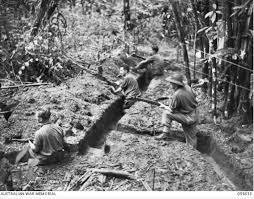
Wau 1942 – 1943 by Phillip Bradley

This is another book in the Australian Army Campaign Series produced by the Australian Army and also another book by Phillip Bradley (see here, here, and here for previous).

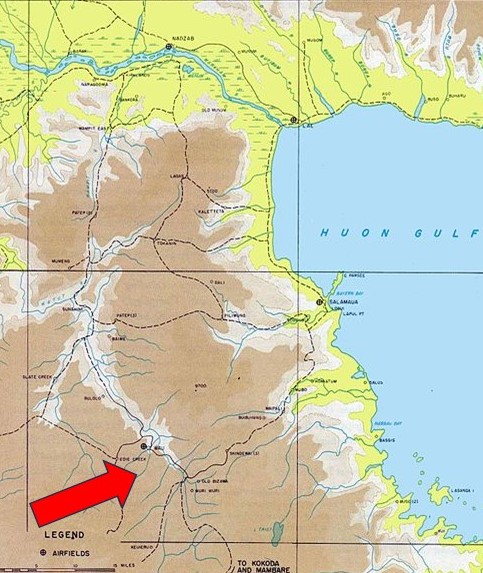
This is one area of the New Guinea Campaign that I knew almost nothing about. In fact I even had to look Wau up on a map to see where it was.

There is an excellent youtube video on the battle.

The Battle for Wau brings together for the first time the full story of the early World War II conflicts in New Guinea, from the landing of the Japanese at Salamaua in March 1942 to their defeat at Wau in February 1943.

Phillip Bradley draws on the recollections of over 70 veterans from the campaign and on his own first-hand knowledge of the region.

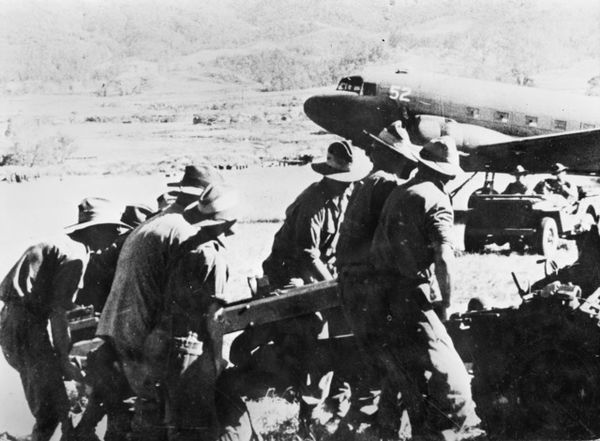
Beginning with the early commando operations in Salamaua, the story unfolds with the burning of Wau, the clashes around Mubo, the Japanese convoy to Lae and the United States air operation to Wau.

The book climaxes with the fortitude of Captain Sherlock’s outnumbered company. Desperately fighting an enemy regiment debouching from the rugged unguarded ranges to the east, Sherlock’s men fought to hold Wau airfield open for the arrival of vital reinforcements.

Another excellent book from Phillip Bradley. He is informative but in a style that is very readable. I learnt a lot form this one!

A Bastard of a Place.

I was a bit reluctant to buy this one as it covers the battles of Kokoda, Milne Bay, Gona, Buna, and Sanananda. I was concerned because I wasn’t sure that it would treat any of the conflicts with enough detail. I was wrong. If you want to read only one book on the Australian Papuan Campaign then this is the one!

The narrative that is woven throughout the book is the self serving incompetence and lack of support for the Generals actually fighting the battle and adequately supplying the troops on the ground by Blamey and Macarthur.

In 1942 and 1943 Papua New Guinea was a Bastard of a Place to fight a war. Peter Brune gives us an all-encompassing story of the five battles that changed Australia forever: Kokoda, Milne Bay, Gona, Buna and Sanananda. His narrative incorporates hundreds of interviews with the soldiers, official records, and a recent tour of the area.” From the publisher.

A great read.

In Country Game 1 August 2023

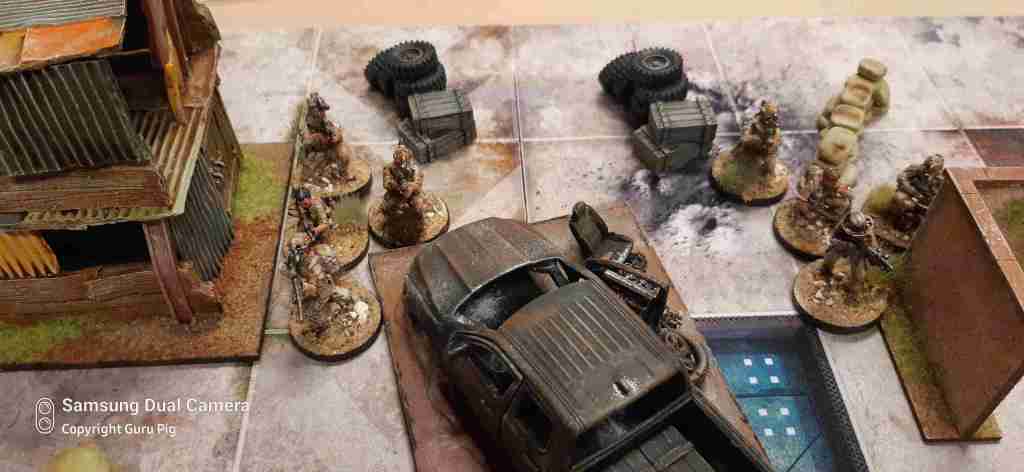
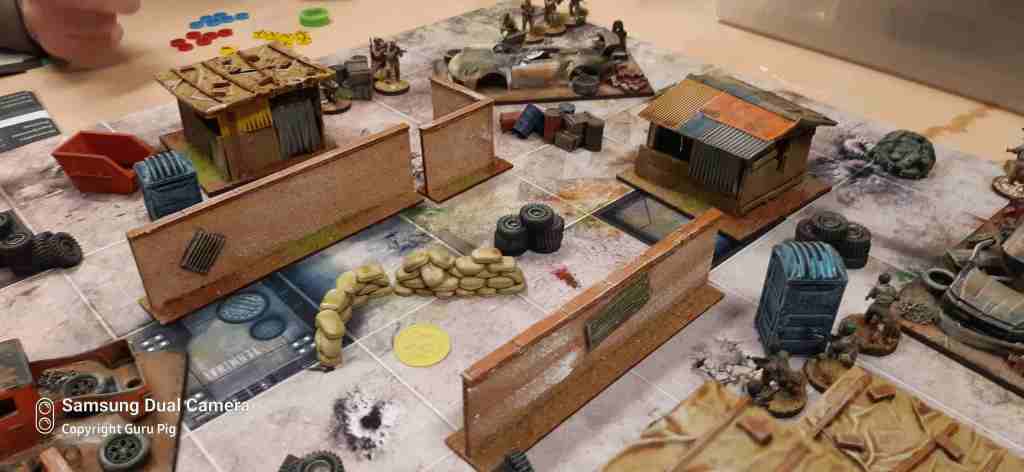
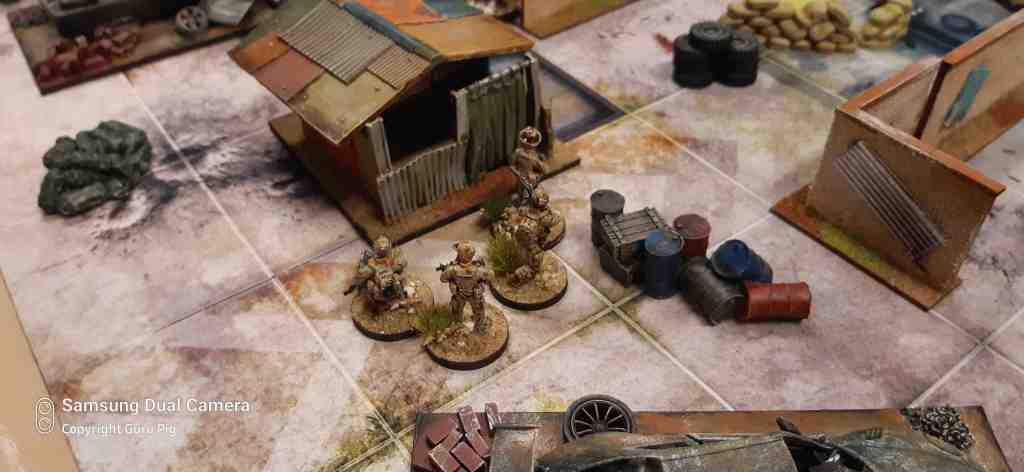
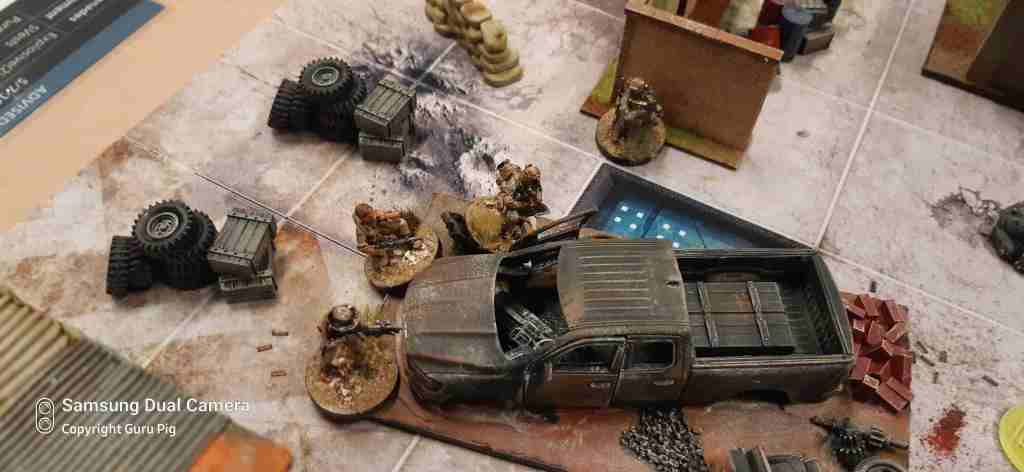
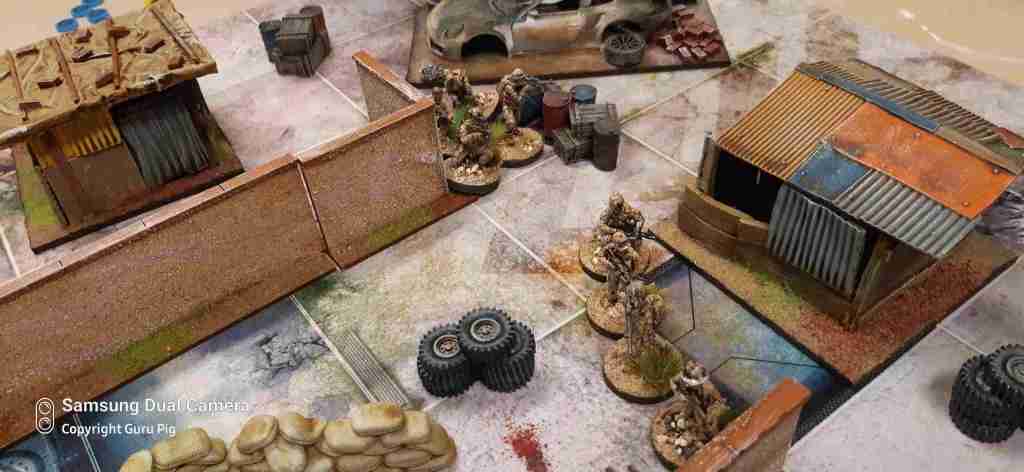
Another great game of “In Country” between 4 squads (2 per player) of African and Western Tier 3 forces.

The African’s objective was to destroy 2 of the the three objective markers.

Africans advancing on the first objective.

Cautious movement by the western R Team.

Western W Team about to unleash all hell on African team R

In the open the whole African squad is cut down.

western R team take a covering position to protect one of the objectives.

While the other squad advances forward.

Western W team consolidate their advance after dealing with the African squad.

The foremost advanced squad now has line of sigh of another objective to protect it from destruction.

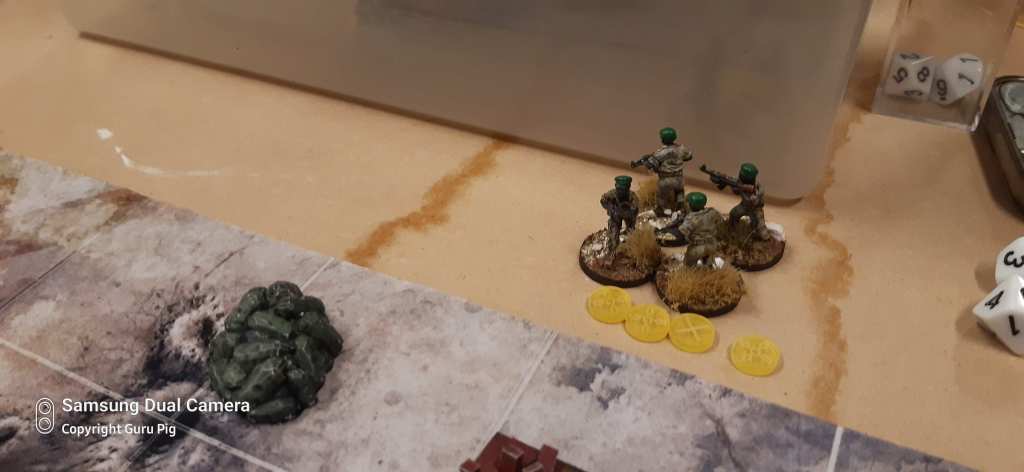
African Squad Guru destroys the first objective.

Western W Team close in to destroy the second African R Team

The R Team hiding in a building.

In a last ditch effort to destroy a second objective Team Guru comes out all guns blazing……. and was wiped out by the Western R teams in ambush.

A great fun game was had by all. The game was played with a “noob” and a one player with only one games experience. The nuances were picked up very quickly as “real” tactics work.

I like these rules a lot.