The WAAF Book – a review

The W.A.A.A.F. Book, edited by Clare Stevenson and Honor Darling, is one of those volumes that is valuable not because it offers a sweeping operational history, but because it preserves the voices of the women who served. Published by Hale & Iremonger in Sydney in 1984, the book runs to 288 pages and includes illustrations, facsimiles and portraits. Its subject is the Women’s Auxiliary Australian Air Force, wartime service, and the personal experiences of Australian women during the Second World War.
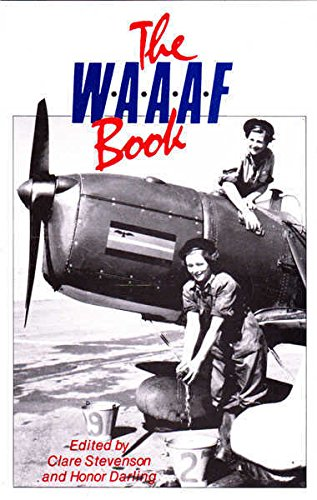
The WAAAF was formed in March 1941, initially to release male RAAF personnel in Australia for overseas service. It became the largest of Australia’s Second World War women’s services, with more than 18,000 women serving at its peak in October 1944 and about 27,000 enlisting across the life of the organisation. That simple set of figures is important, because it reminds us that the WAAAF was not a minor footnote to the war. It was a major part of the Australian wartime machine, and without it the RAAF would have struggled to function at the scale it did.

The great strength of this book is that it is close to the experience. It is not written from the comfortable distance of later academic interpretation. It is a book shaped by memory, service, comradeship and reflection. That gives it a different character from a conventional military history. The emphasis is not on campaigns, aircraft types, command decisions or grand strategy, although all of those things sit in the background. Instead, the book brings forward the human experience of women who entered a military world that had not been built for them, learned new skills, endured restrictions, performed essential work, and then often saw that contribution pushed to the edges of the national war story.

Clare Stevenson was an especially significant figure to have associated with such a volume. She was appointed Director of the WAAAF in June 1941 and was responsible for the management and expansion of the service. The Australian Dictionary of Biography records that she fought for standards, rights, training, housing, clothing, education and better treatment for WAAAF personnel, all while confronting discrimination in pay and conditions. This matters when reading the book. Stevenson was not simply an editor looking back fondly on old times. She had carried much of the burden of making the WAAAF work.

Honor Darling also brought an appropriate background to the task. She had been a journalist before joining the WAAAF in 1942, served until the end of the war, and edited a magazine for WAAAF members. That editorial experience shows in the purpose of the book. It is a gathered memory, but not a shapeless one. It has the feel of a service community trying to tell its own story before it disappears into scattered recollection.

For the modern reader, the book is particularly useful because it captures the texture of service. The WAAAF was not glamorous in the way wartime recruiting posters sometimes suggested. Its members worked in administration, signals, transport, technical trades and other ground roles, taking on work that had previously been treated as male work. They had to prove themselves twice over: first as competent service personnel, and second as women in a system that often doubted they should be there at all. That tension gives the book much of its importance.

As a source, it needs to be read with some care. Memory books tend to soften edges. They can favour pride, humour and affection over bitterness, conflict or institutional failure. That is not a flaw so much as a feature of the form. This is not the last word on the WAAAF, and it should be read alongside later historical work on women’s wartime service, gender, labour and the Australian home front. But it remains a valuable primary style collection because it preserves how former WAAAF members wanted their service remembered.

The book also reminds us that the Second World War changed Australian society in ways that were not confined to the battlefield. Women who joined the WAAAF entered uniformed service, handled responsibility, gained training, worked within a military organisation, and demonstrated that the old assumptions about women’s capacity were increasingly difficult to defend. The war did not produce equality, and many of the old barriers returned once the emergency passed, but the experience could not simply be undone.

The most moving aspect of The W.A.A.A.F. Book is that it gives dignity to work that was often treated as background labour. Aircraft did not fly because pilots alone made them fly. They flew because clerks, drivers, teleprinter operators, cooks, mechanics, storewomen, wireless operators and many others kept the system moving. The WAAAF did not merely “release men” for other duties. Its members became part of the operational fabric of the RAAF.

In that sense, this is a book about recognition. It records a generation of women who served in a military organisation that needed them, even if it did not always know how to value them properly. It is affectionate, sometimes nostalgic, and necessarily partial, but it is also important. For anyone interested in Australian military history, women’s service, the home front, or the social changes produced by the Second World War, The W.A.A.A.F. Book is well worth reading.

It is not a battlefield history. It is something more intimate: a record of service from those who lived it. I loved it!

The Church of Dagon

It has been some time since I willingly stepped back inside a church, and I am pleased to report that the roof did not fall in, the walls did not crack, and no sudden bolt of divine judgement reduced me to a smoking pair of boots. Admittedly, this may have had something to do with the fact that this particular church belongs to Dagon, which means the usual rules of holiness, salvation and basic structural integrity probably do not apply. In fact, if anything was going to be cursed, damp, suspiciously fish scented and full of people best avoided after dark, this was always going to be it.

I have always liked Jonathan Haythornthwaite’s Dracula’s America, partly because it combines two things that have rarely done me any harm on the tabletop: the Old West and deeply questionable supernatural decision making. It is a setting full of gunfighters, vampires, secret cults, cursed posses and all the other healthy influences one naturally looks for in a wholesome afternoon’s gaming.

So, after only ten or so years of careful contemplation, strategic neglect, and the occasional ceremonial moving of the box from one shelf to another, the Church of Dagon has finally emerged from the lead pile. This is not procrastination, of course. It is a mature and considered hobby process, involving long term planning, deep reflection, and a great deal of pretending not to notice the unopened packs every time I walked past them.

The figures have been waiting patiently for their moment, although in the case of the Church of Dagon, “patiently” probably means muttering in the dark, growing scales, and conducting small private rituals among the other neglected miniatures. There is something entirely appropriate about a cursed cult spending a decade hidden away in a box, slowly gathering strength while I was distracted by other projects. If anything, it feels like proper background development.

Now they have finally been dragged into the light, or at least into the slightly dusty glow of the painting desk, it seems only fair to give them the attention they deserve. This particular congregation is not overly concerned with salvation, good works, or improving the moral condition of the frontier. Their interests appear to lie more in tentacles, mutation, damp robes, suspicious chanting, and the sort of sermon that ends with everyone being dragged into the water.

In that sense, the Church of Dagon is probably the perfect Dracula’s America project. It lets me reduce the lead pile while also indulging in something grim, strange, and deeply unhealthy looking. More importantly, it allows me to pretend that returning to figures bought over a decade ago is not a sign of hobby disorganisation, but a carefully timed resurrection of an eldritch cult whose hour has finally come.

One of the more unsettling posses in Dracula’s America is the Church of Dagon. In a game already full of vampires, cursed soldiers, witches, skinwalkers and dark powers, the Church of Dagon manages to feel different. They are not simply another band of gunmen with a few strange habits. They are a cult, and worse still, they are a cult that believes the world is not ending, but finally beginning.

The Church of Dagon belongs to the stranger, wetter and more rotten corners of the Weird West. These are not men and women riding out under a clean prairie sky in search of gold, revenge or political power. They come from the swamps, river towns, hidden settlements and forgotten coastal communities where old beliefs have taken root in the mud. Their faith is not Christian, although they may borrow the language of revival meetings and frontier preaching. Their god is older, colder and far less interested in saving souls.

Dagon himself comes from the deep places. In Lovecraftian horror he is associated with ancient sea powers, monstrous underwater races, human corruption and the terrible idea that humanity is not alone, not special, and not even entirely human in some bloodlines. That makes him a perfect fit for Dracula’s America. The setting already imagines an America where history has gone badly wrong, where Dracula rules, supernatural forces walk openly or half openly, and ordinary men and women must survive in a world where the old certainties have collapsed. Into that world steps the Church of Dagon, promising revelation, power and belonging to those willing to kneel before something vast and inhuman.

The cult’s appeal is easy enough to understand. The American frontier was full of people living under pressure. War, poverty, disease, displacement, greed and isolation all shaped frontier life. In the world of Dracula’s America, those pressures are made worse by the presence of real monsters and real magic. A preacher who claims to have seen the truth beneath the waves, or heard the voice of an ancient power in a dream, might find followers among the desperate, the broken and the ambitious. Some would join out of fear. Some would join for power. Some would join because they had already begun to change and needed someone to tell them the change was holy.

That is the real horror of the Church of Dagon. They do not necessarily see themselves as villains. Like many cults, they believe they are the chosen few. They speak of revelation, judgement and the return of powers older than mankind. They believe the strange mutations among them are not signs of corruption, but marks of blessing. A man with scaled skin, webbed hands or something worse beneath his coat is not pitied by the faithful. He is proof. He is a sign that Dagon has noticed them.

On the tabletop this gives the posse a very strong identity. A Church of Dagon force should not feel like a normal outlaw gang with a monster added on. It should feel like a religious procession gone wrong. The Priest of Dagon is the centre of the group, not merely as a leader, but as the mouthpiece of something beyond the world. Around him are cultists, gunmen and hybrids, all tied together by a shared belief that the old order must be washed away. Their weapons may be pistols, rifles and shotguns, but their real strength lies in fanaticism and the promise of eldritch power.

For painting and modelling, the Church offers plenty of character. Robes, dark coats, swamp colours, pallid flesh, scaled skin, glassy eyes and hints of sea green or muddy brown all suit them well. They should look as though they have stepped out of a decaying chapel beside a black river. A few normal looking cultists are useful, because they make the hybrids seem even more disturbing. The best horror is often in the contrast between the ordinary and the impossible. A man with a revolver and a preacher’s hat is frightening enough. The thing beside him with claws, scales and a half human face is worse.

The Church of Dagon also offers excellent scenario possibilities. They might be searching for a relic dredged from a riverbed, kidnapping townsfolk for a midnight rite, defending a hidden shrine in the bayou, or trying to summon something that should have remained beneath the water. Other factions have every reason to oppose them. The Salem Sisterhood would see them as a threat to the arcane balance. The Twilight Order would recognise them as servants of abomination. Ordinary posses might simply want to stop children disappearing from town. Even Dracula’s servants might not welcome a rival power gathering worshippers in the dark places of America.

What I like most about the Church of Dagon is that they bring a different kind of horror to the Weird West. Vampires are aristocratic horror. Were beasts are savage horror. Ghosts are tragic horror. The Church of Dagon is cult horror. It is the horror of secret meetings, whispered prayers, strange births, locked church doors, and the feeling that something ancient is waiting patiently beneath the surface. In Dracula’s America, that makes them a wonderful faction for anyone who wants their games to feel less like a shootout and more like the final act of a very bad sermon.

The West was already dangerous enough with guns, vampires and ambition. The Church of Dagon makes it clear that some dangers did not come from the West at all. Some came from below.

Eight figures is not a lot to paint so I will put one on the end of each painting stick and will have them done in a reasonable time frame……………….or NOT!

The second instalment of “Hennessy of the A.I.F. – The Long Withdrawal”

The second instalment in the exploits of Jack Hennessy and his section of the 2/4th Battalion of the Australian 6th Division follows the men from the heat and hard fighting of North Africa into the mountains, roads and shattered villages of Greece. The book is now available on Amazon.

After their successes against the Italians, Hennessy and his mates are given little time to rest. The war has moved again, and the Australians are rushed across the Mediterranean to help stop the German and Italian invasion of Greece. What begins as another campaign soon becomes something very different. The enemy is faster, stronger and better supplied. The air belongs to the Luftwaffe. The roads are crowded with refugees, retreating columns and exhausted soldiers trying to hold one more line before falling back again.

For Hennessy and his section, Greece is not a story of easy victories. It is a campaign of withdrawal, endurance and sacrifice. They fight in cold mountain passes, under constant air attack, and along roads where every delay may save men further south. The Long Withdrawal is a story of mateship under pressure, courage without glory, and the cost paid by ordinary soldiers when grand strategy begins to fall apart.

Back Page Blurb:

The desert taught them how to advance.

Greece will teach them how to withdraw.

Jack Hennessy is not a hero in search of glory. A fitter by trade and a quiet leader by necessity, he has learned that survival depends less on bravado than on reliability, discipline and the men beside him. Around him remains a section of ordinary Australians: larrikins, labourers, boys barely grown, and veterans already marked by war.

After North Africa, they are no longer raw volunteers. They have faced heat, dust, fear and fire. But April 1941 carries them into a different campaign, one of mountain roads, broken passes, refugee columns, delayed orders and skies ruled by German aircraft.

As the Allied line bends south through Greece, Hennessy’s men are caught in a fighting withdrawal where positions are held only long enough to be abandoned, rumours outrun truth, and every mile costs something. From Servia Pass to Brallos, from burning roads to the dark embarkation beaches, The Long Withdrawal follows soldiers learning that retreat demands its own kind of courage. Survival is not victory. And Crete is not the end.

I hope you enjoy it.

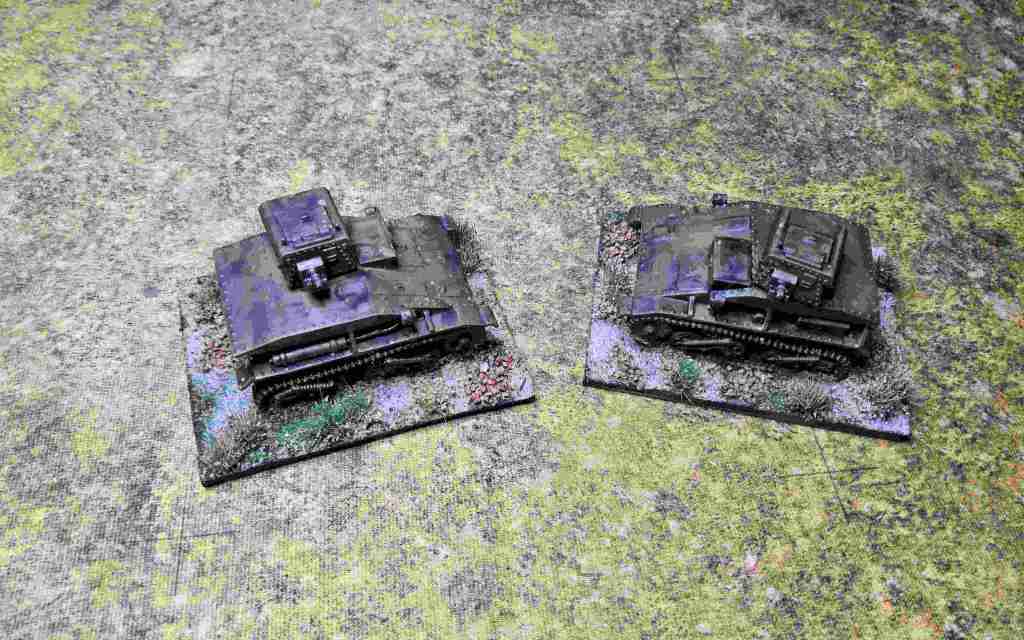
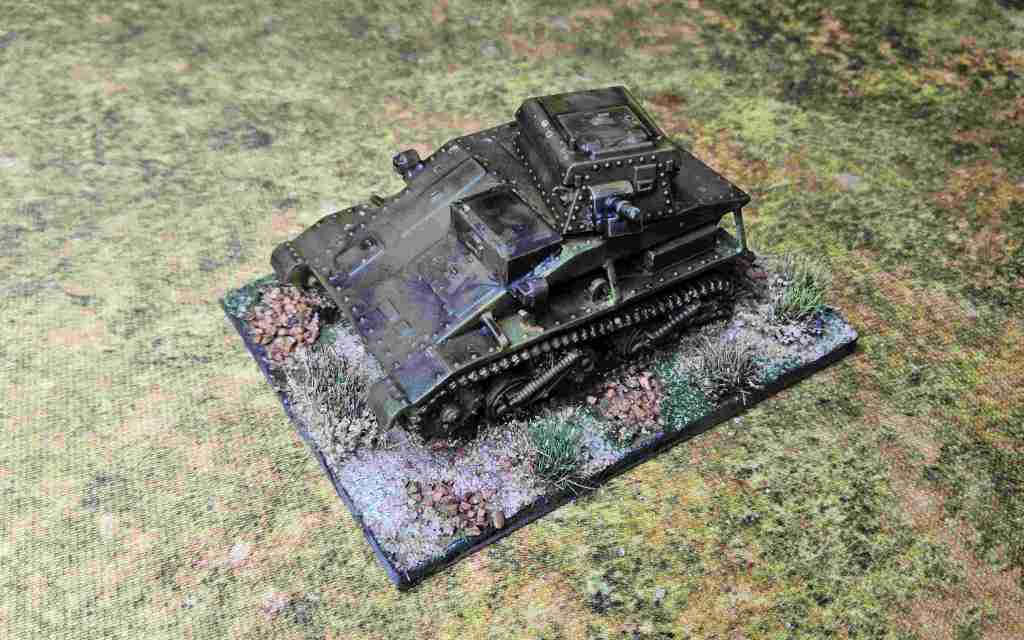
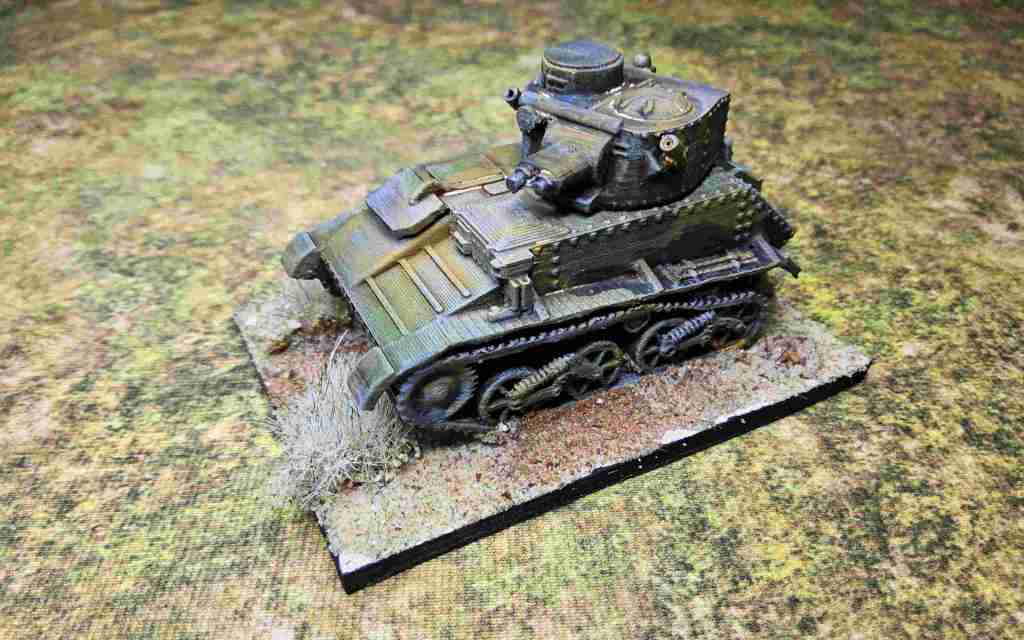
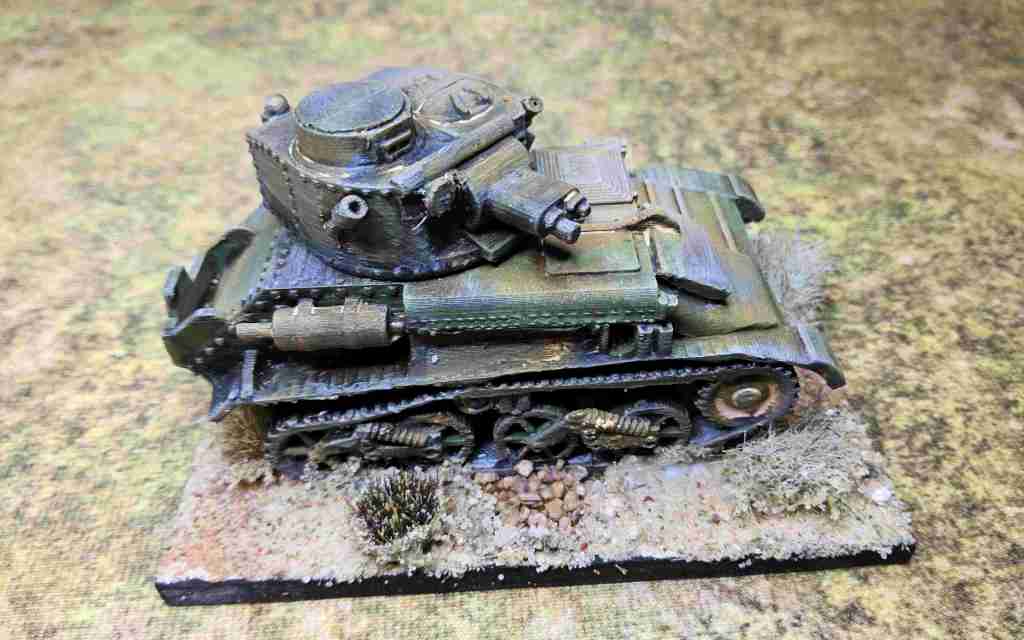
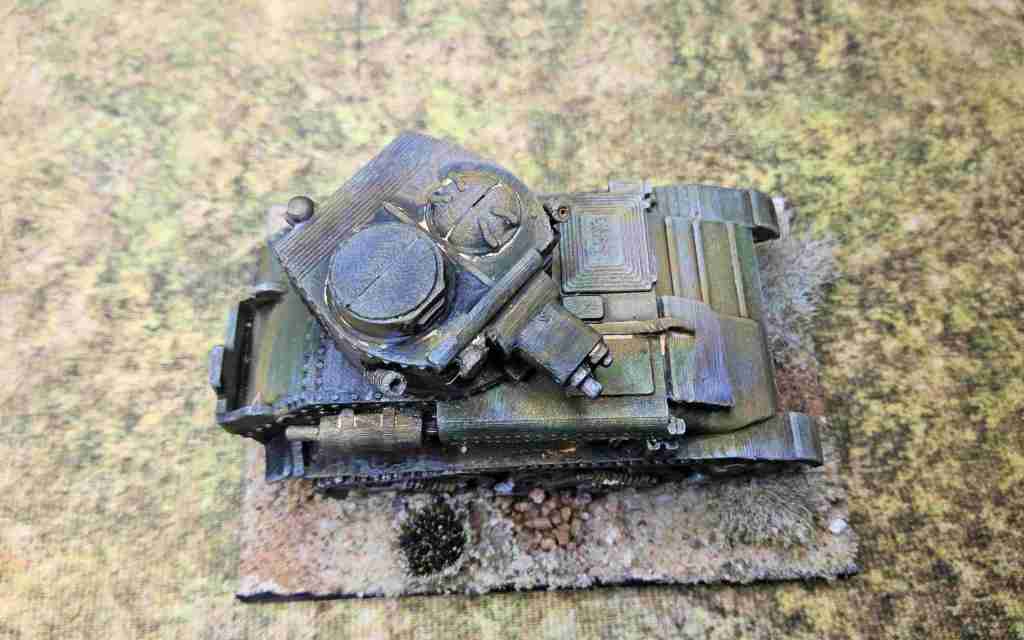
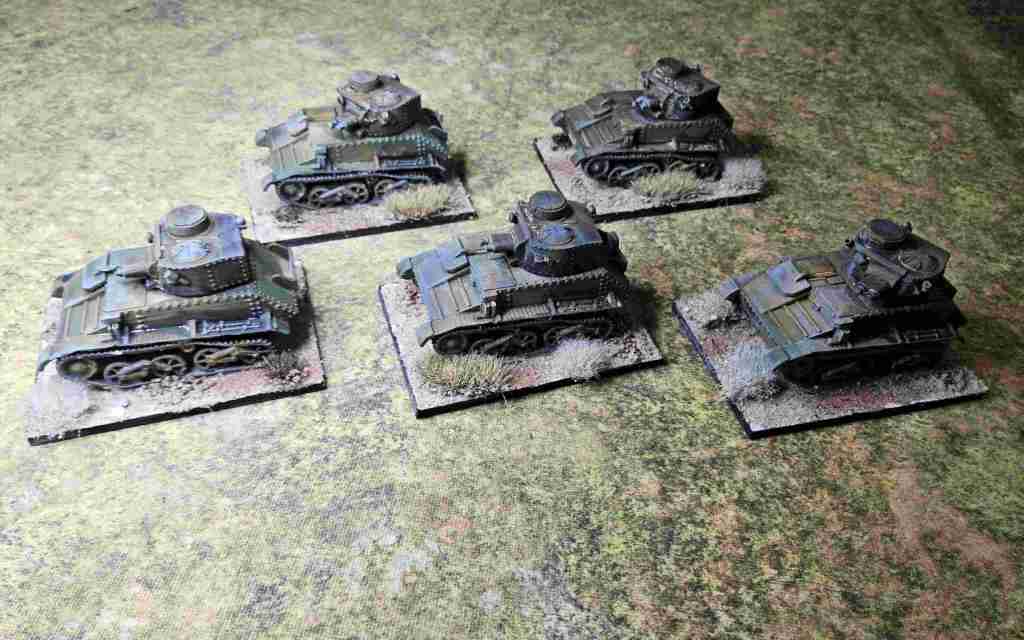
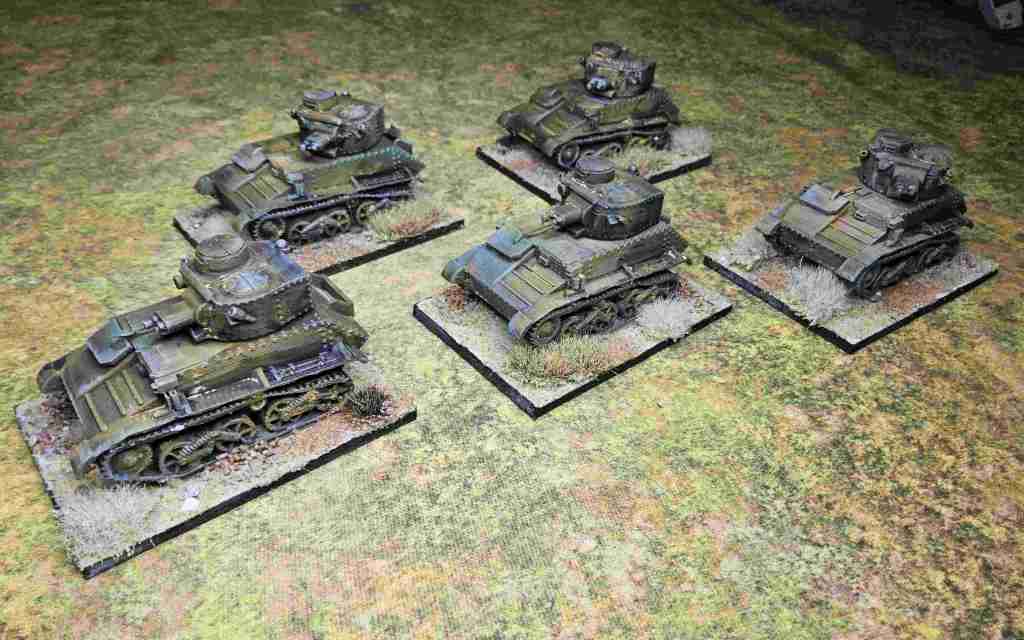
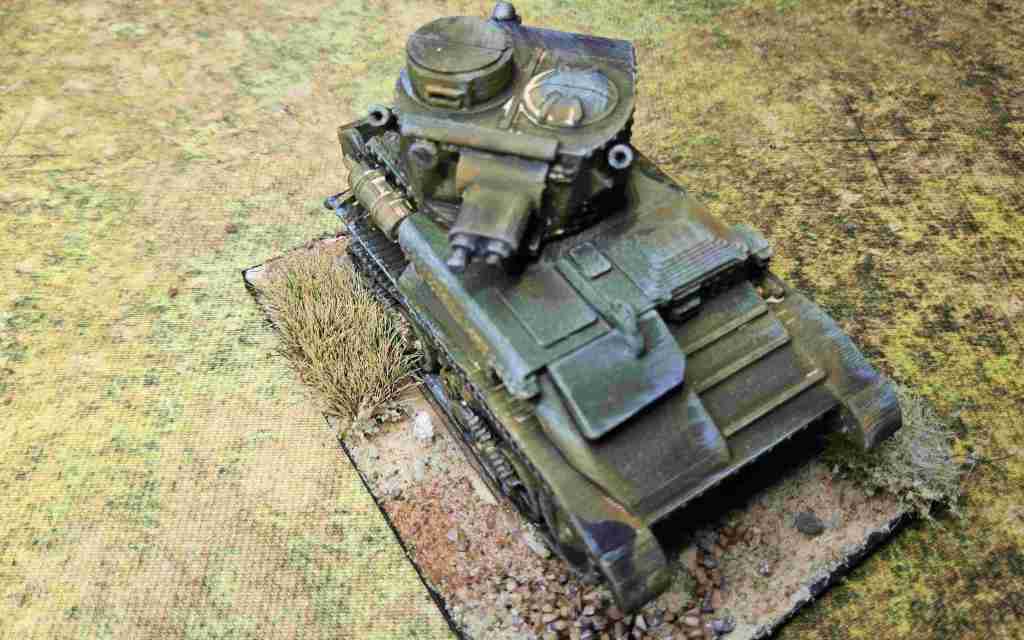
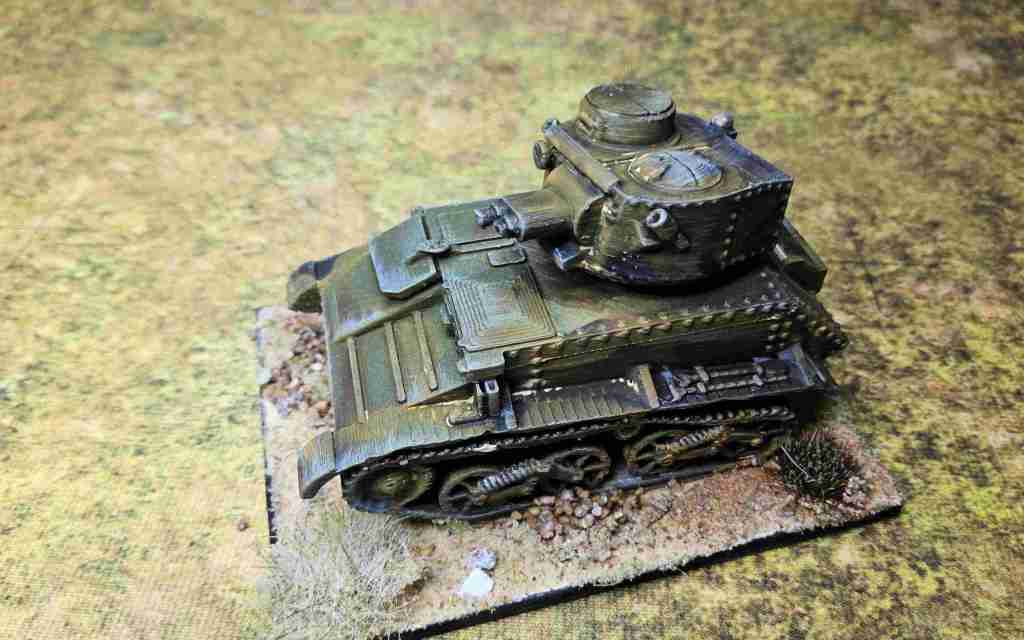
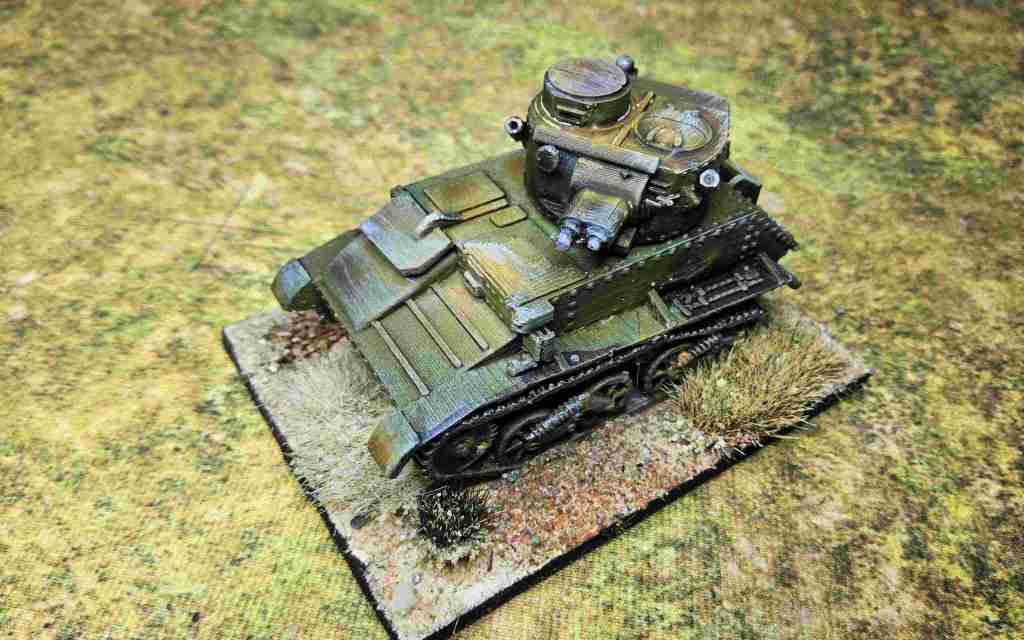
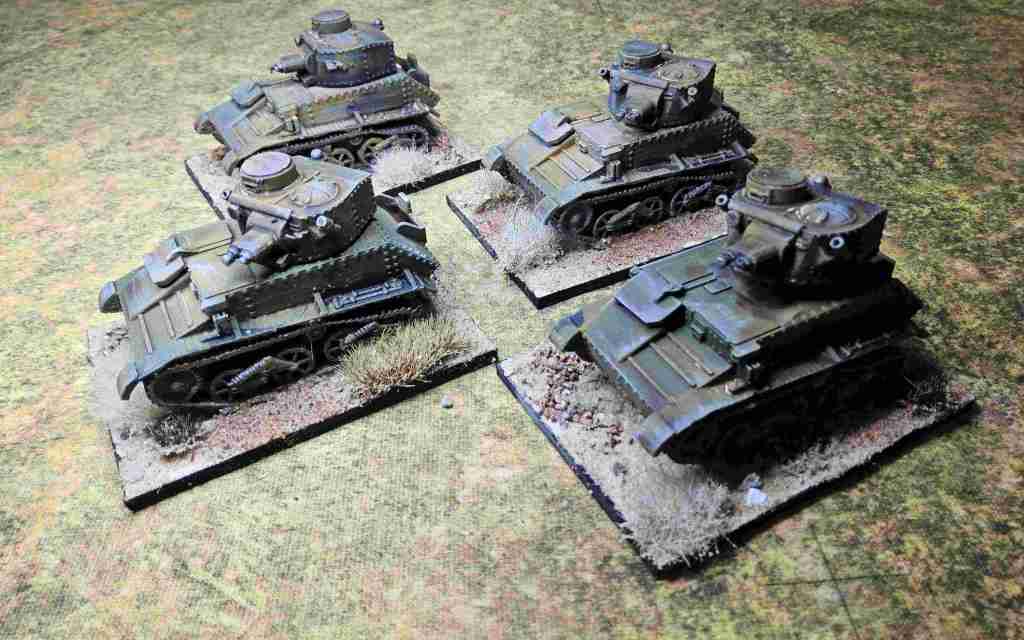
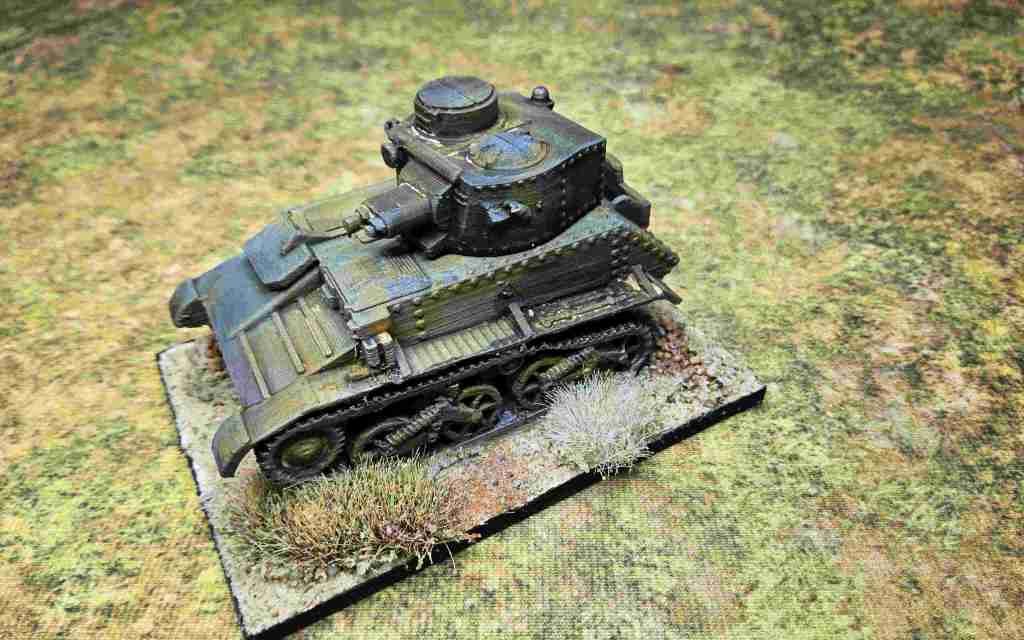
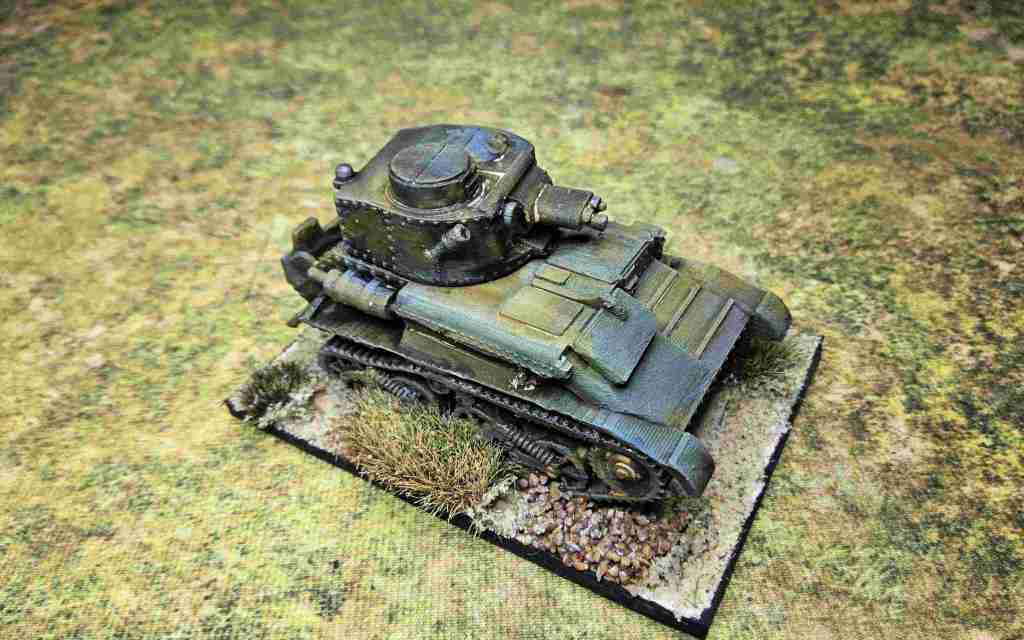
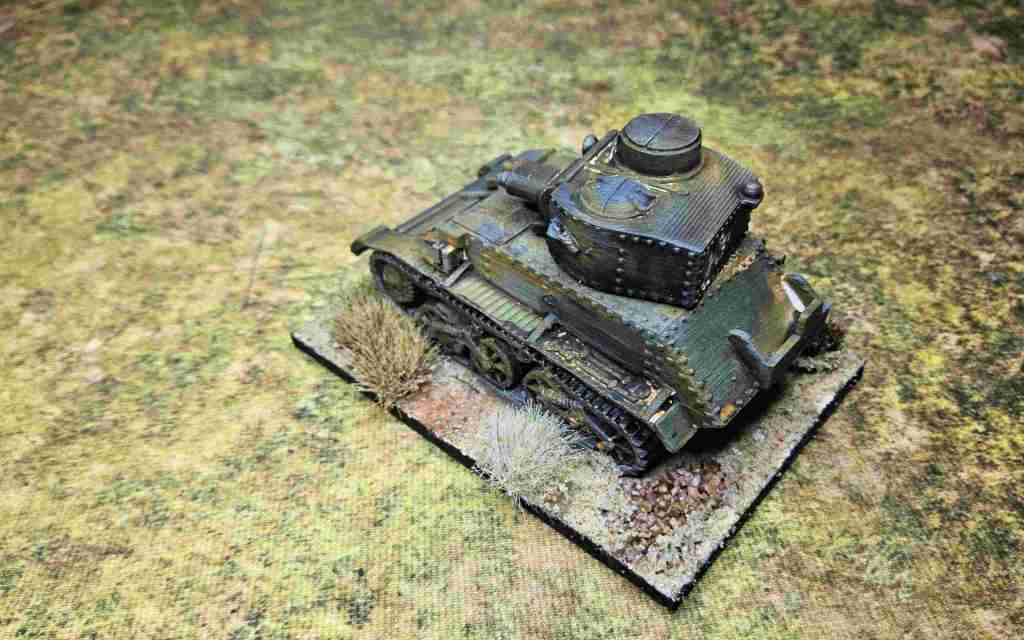
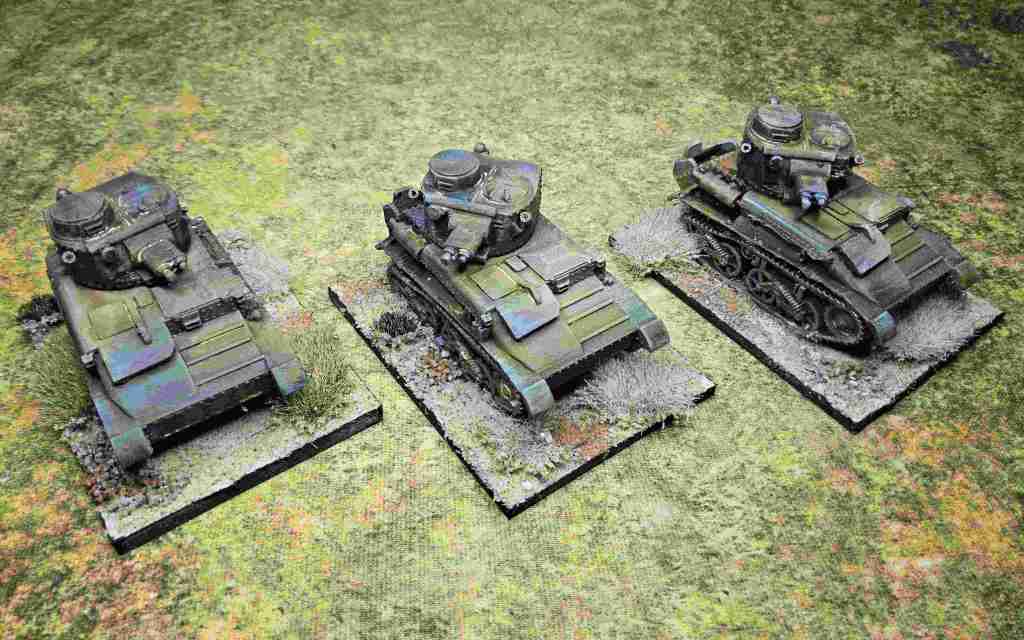
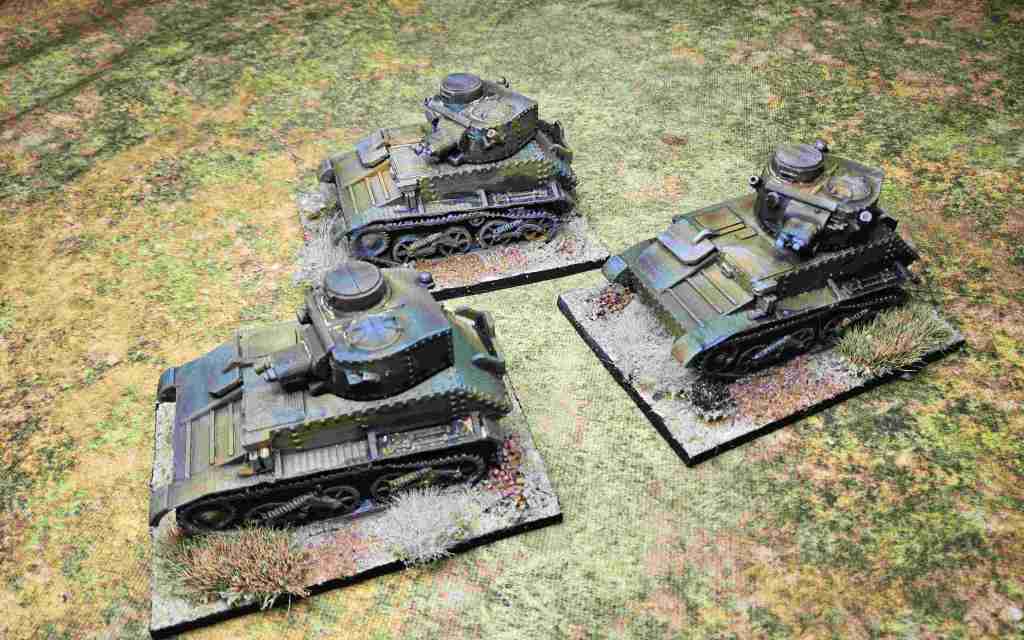
KNIL Vickers Carden Loyd Model 1936 Light Tank


The latest addition to my growing Dutch East Indies force is a platoon of Vickers Carden Loyd light tanks from Dark Castle Terrain. As with the rest of the range, the models are beautifully sculpted, full of character, and a pleasure to paint. They are also something a little different from the more familiar Allied light tanks of the early Second World War and add an interesting historical element to a KNIL force.


The story of these little tanks began in 1937 when the Royal Netherlands East Indies Army (KNIL) purchased two Vickers Carden Loyd light tanks and two amphibious versions for evaluation. The trials proved successful and the Dutch placed an order for a further seventy three production vehicles. Unfortunately, the outbreak of war in Europe intervened before the order could be completed. Britain halted exports to meet its own wartime requirements, and only around twenty tanks reached the Netherlands East Indies before deliveries ceased. This small number would form the nucleus of the KNIL’s armoured force during the campaign of 1942.


Although small by later standards, the Vickers was a capable reconnaissance vehicle for its day. Weighing about four tonnes, it carried a crew of two and was powered by an 88 horsepower Meadows petrol engine that gave it a top road speed of around 60 kilometres per hour. Armour protection ranged from approximately 6 to 13 millimetres, enough to resist rifle fire and shell splinters but little more. Its armament consisted of a single water cooled Vickers .303 machine gun mounted in a one man turret. The tank was intended for reconnaissance, infantry support and rapid manoeuvre rather than engaging enemy armour.


For games using Bolt Action, the Vickers Carden Loyd is a useful little tank. It comes armed with a light machine gun and has the option of adding a second hull mounted light machine gun, giving it a respectable volume of fire for such a small vehicle. The Dutch upgraded some of the tanks with one and sometimes two heavy machineguns. With its +1 penetration the tank can be very effective against enemy infantry and even armour when used sensibly. It is not a tank to throw away in a head on fight, but if employed to support infantry, exploit flanks and suppress enemy positions, it can more than justify its place in a Dutch force.

The Vickers Carden Loyds saw their principal combat during the defence of Java in March 1942. Assigned to the KNIL Mobile Unit, they took part in a series of counter attacks aimed at slowing the rapid Japanese advance across the island. Some of the fiercest fighting occurred around Kalidjati Airfield, where Dutch forces attempted to recapture the strategically important airfield shortly after it had been seized by Japanese airborne troops. The little Vickers tanks supported infantry attacks with determination and, despite their light armament, achieved some local success against Japanese infantry who had limited anti tank weapons immediately available.


The tanks also fought during the battles around the Tjiater Pass, one of the key approaches to Bandung, where the Dutch attempted to delay the Japanese advance into the island’s interior. The difficult terrain, poor communications and constant Japanese air attacks severely limited what the small Dutch armoured force could achieve. Nevertheless, the Vickers crews fought with considerable courage, repeatedly supporting counter attacks and delaying actions against an enemy that enjoyed overwhelming superiority in numbers, artillery and air power.


In the end, the campaign was decided not by the performance of the Vickers tanks but by the overall strategic situation. The KNIL possessed too few armoured vehicles to influence the outcome of the fighting, and following the surrender of Java many of the surviving tanks were destroyed or captured. Even so, the Vickers Carden Loyd remains an important part of Dutch military history as the first modern light tank to serve with the KNIL and one of the few armoured vehicles to fight in the desperate final defence of Java.


I am looking forward to seeing these excellent Dark Castle Miniatures models on the tabletop. They may be small, lightly armed and thinly armoured, but they have an interesting history and will make a distinctive addition to my Dutch East Indies force.

Some more tomorrow?

New offering from Guru!

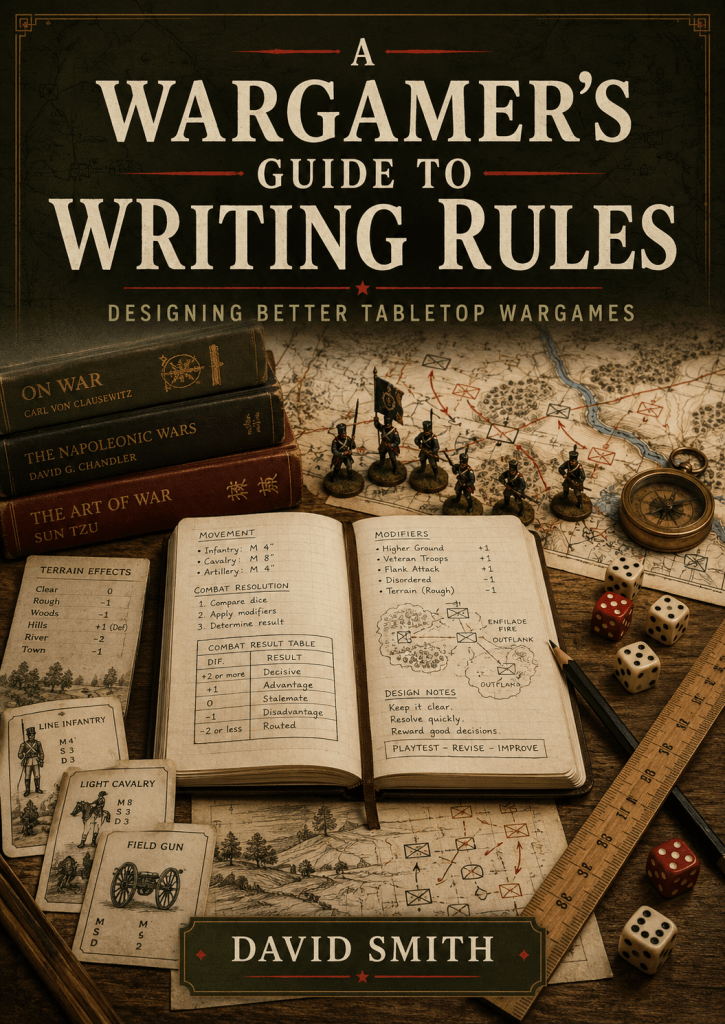
Hi everyone my latest offering has just appeared on Amazon. It is one of a number of books that should be out for print this month. This one is an update of a small booklet that I produced about ten years ago and decided to update with the proliferation of AI used in publishing and games design these days.

Back Page Blurb:

Writing good wargame rules is not simply a matter of inventing clever mechanics. It is the art of turning history, imagination, probability, uncertainty, and player decision making into a game that other people can actually understand and enjoy.

A Wargamer’s Guide to Writing Rules is a practical guide for anyone who wants to design, revise, playtest, or publish tabletop wargames. It combines practical knowledge and design theory, drawing on historical research, game design, probability, player psychology, artificial intelligence, playtesting, editing, and publishing. Rather than treating rules as isolated mechanics, the book looks at how a game works as a whole: how movement, combat, morale, command, scenarios, campaigns, and presentation all shape the experience at the table.

This is not a book that needs to be read from cover to cover. It is designed to be used. A designer struggling with morale can turn to that chapter. Someone building a campaign can go straight to campaign design. A writer wrestling with unclear rules can use the sections on editing, coherency, and presentation. A publisher preparing a finished set of rules can turn to the chapters on layout, support, errata, and long term development.

Written for miniature wargamers, board wargamers, club organisers, solo gamers, scenario writers, independent publishers, and anyone who has ever said, “I could write a better set of rules than this,” the book offers both encouragement and warning. Rules do not need to be perfect, but they do need to be clear, playable, tested, and honest about what they are trying to achieve.

Whether you are writing your first skirmish game, developing a campaign system, revising a long running club project, or preparing a ruleset for publication, this guide provides a practical companion from first idea to finished game.

Enjoy!

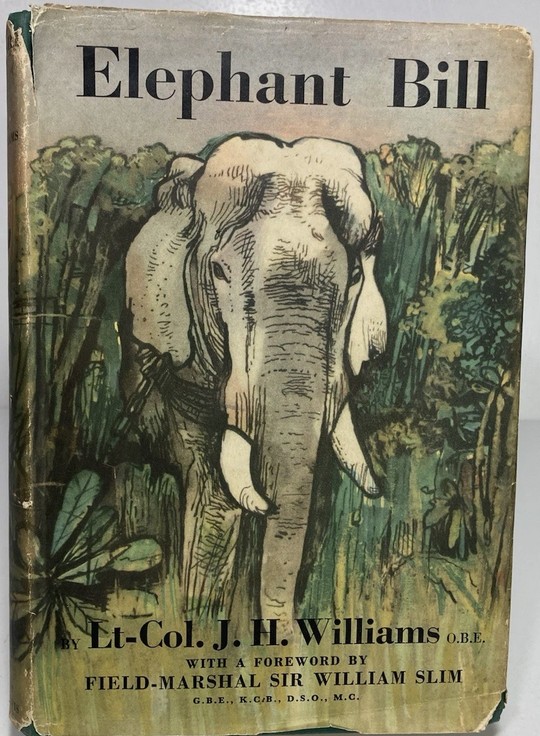
Elephant Bill – a review

Review: Elephant Bill by J. H. Williams

J. H. Williams’s Elephant Bill is a remarkable book because it is not quite one thing. It is part memoir, part animal story, part colonial forestry account, and part Second World War narrative. It belongs to that older tradition of British imperial writing in which adventure, observation, hardship and understatement are mixed together in a way that can be both engaging and occasionally uncomfortable to a modern reader. Yet the book survives because the central subject is so unusual and so strongly told. This is not simply a war memoir with elephants in the background. The elephants are at the heart of the book.

Williams, known as “Elephant Bill”, spent many years in Burma working with timber elephants before the war changed everything. His knowledge of the animals, the forests, the tracks, the rivers and the men who worked with them made him valuable when the Japanese advance transformed Burma from a working landscape into a battlefield. What follows is a story of retreat, improvisation, endurance and loyalty, told through the relationship between humans and elephants under extreme pressure.

The great strength of the book is Williams’s affection for the elephants themselves. He does not treat them merely as machines or picturesque background. He writes about their intelligence, temperament, habits, fears, loyalties and stubbornness. Each animal becomes an individual. Some are brave, some are difficult, some are dependable, some are comic, and some are tragic. Williams clearly admired them, and that admiration gives the book its emotional force. The best passages are not necessarily the military ones, but those in which he describes how elephants think, work, remember and respond to human handling.

As a war book, Elephant Bill is valuable because it shows a side of the Burma campaign that is often overlooked. The popular memory of the campaign tends to focus on jungle fighting, Chindits, disease, retreat, supply problems and the eventual hard won advance back into Burma. Williams adds another layer. He shows how logistics in this theatre depended not only on trucks, aircraft and mules, but also on living creatures able to go where machines could not. Elephants could haul, push, lift, drag, build and carry in country where normal transport broke down. In that sense the book is a useful reminder that war is often decided by the unglamorous business of movement, supply and engineering.

It is also worth distinguishing Elephant Bill from Andrew Martin’s Flight by Elephant. The two books are connected by setting, period and subject matter, but they are not the same story. Flight by Elephant is a much more tightly focused account of Gyles Mackrell’s 1942 rescue of refugees fleeing Burma into India, using elephants to help them through appalling jungle, river and monsoon conditions. Elephant Bill, by contrast, is broader and more personal. It is Williams’s own memoir of a life spent among elephants, first in the timber trade and then in the war. Where Martin’s book is centred on one dramatic rescue operation, Williams’s book is concerned with a whole way of life, a long apprenticeship in elephant handling, and the transformation of that knowledge into wartime service.

That difference matters. Readers coming to Elephant Bill expecting only a single rescue narrative may find that it ranges more widely than expected. It is as much about learning elephants as it is about escaping Burma. Williams gives us the practical world behind the more dramatic wartime episodes: how elephants were trained, how they were handled, what they could do, what they would not do, and why a good elephant man needed patience, judgement and experience. This broader canvas is the reason the book remains valuable. It shows not only what elephants did in war, but why they were capable of doing it.

The narrative is at its most gripping when Williams describes evacuation and withdrawal. There is a sense of a whole world being pulled apart: families, workers, animals and military units all trying to escape through difficult country while the Japanese advance closes in. The movement of elephants through mountains, forests and broken country gives the book much of its lasting reputation. It reads almost like an impossible expedition, but one grounded in practical detail. Williams is good at explaining what can and cannot be done with elephants, and why judgement matters more than brute force.

The book also needs to be read as a product of its time. Its language and assumptions are those of a British officer and colonial forestry man writing in the middle of the twentieth century. Modern readers will notice the paternal tone, the imperial setting and the way Burmese people are often described through the eyes of a European employer. That does not make the book worthless. It does mean it should be read carefully. Williams’s affection for his elephants is obvious, and his respect for skilled elephant handlers is often clear, but the wider colonial world in which he worked is rarely questioned. The book is therefore both a fascinating account and a historical document shaped by its own limits.

Stylistically, Elephant Bill is plain, direct and often charming. Williams is not trying to write a grand literary work. He writes like a practical man who has seen strange things and wants to explain them clearly. At times the pacing can wander, especially when the book moves into detailed reminiscence about elephant behaviour and forestry life. Some readers may find those sections slow. For others, they are the best part of the book, because they preserve a world that has almost vanished. The detail gives the story weight.

What makes the book memorable is its combination of warmth and hardship. There is humour in it, and there is adventure, but there is also loss. Elephants are injured, men are displaced, Burma is torn apart, and the war intrudes on a way of life that had already been built on unequal foundations. Williams does not always analyse these larger issues, but they sit behind the narrative. The modern reader can see more than the author perhaps intended.

For anyone interested in the Burma campaign, Elephant Bill is well worth reading. It will not replace more formal military histories, but it adds something they often lack: texture. It shows the practical reality of war in jungle and mountain country. It shows how local knowledge mattered. It shows that logistics could be heroic without looking heroic. Above all, it shows that animals were not incidental to war. They were participants in it, dragged into human conflict and made essential to survival.

I would not call Elephant Bill a perfect book. It is dated in places, uneven in structure, and shaped by the attitudes of its period. But it is also vivid, humane, unusual and deeply memorable. If Flight by Elephant tells the sharper and more concentrated story of a particular rescue, Elephant Bill gives the larger world from which such a rescue was possible. Its best passages stay with you because they are not about generals or grand strategy, but about men, forests, mud, retreat, and elephants doing impossible work in impossible country. That is why the book still deserves attention.

PS Searching my posts I am surprised that I have not reviewed Andrew Martin’s Flight by Elephant so I will rectify this in the next few days.

Today in military history?

Here are some military events associated with 4 July.

July 1843 — Warrigal Creek massacres, Gippsland.
The University of Newcastle Colonial Frontier Massacres project dates the Warrigal Creek massacre group to between 1 July and 31 July 1843, with Brataualung victims and settler attackers. That range includes 4 July, but the exact day is not established.

July 1866 — Euri Creek, Queensland.
The Euri Creek massacre is dated by the same project to between 1 July and 31 July 1866. It records Yuru victims and Native Police attackers, with about 30 people killed. Again, the exact day is uncertain, but 4 July falls within the date range.

1 to 15 July 1910 — Dungginmini, Northern Territory.
The Dungginmini massacre is dated to between 1 July and 15 July 1910, with Gurdanji victims and pastoralist attackers. This is a late frontier violence entry and the date range includes 4 July, but it cannot honestly be pinned to that exact day.

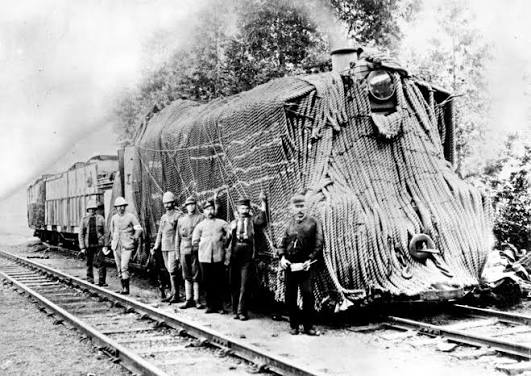
4 July 1901 — Naboomspruit armoured train ambush.
A Boer ambush of an armoured train near Naboomspruit took place on 4 July 1901, involving the 2nd Gordon Highlanders and Australians.

4 July 1916 — The “Bluebirds” left Sydney. Twenty Australian Red Cross nurses, known as the Bluebirds because of their blue uniforms, sailed aboard the hospital ship Kanowna for service in France.

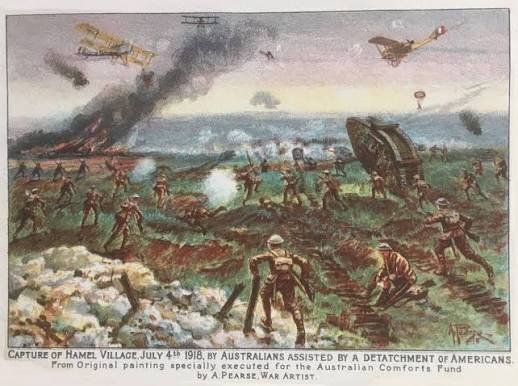
    4 July 1918 — Battle of Hamel. The Australian Corps, commanded by Lieutenant General John Monash, attacked and captured Hamel on the Western Front. 4 July 1918 — Monash’s first major set piece battle as Australian Corps commander. Hamel became one of the clearest examples of his careful planning and use of combined arms.

    4 July 1918 — Australians and Americans fought together at Hamel. American troops were attached to Australian units, making Hamel one of the first significant Australian and American battlefield cooperations.

    4 July 1918 — Tanks, aircraft, infantry, and artillery were coordinated at Hamel. The battle became a model for later Allied attacks in 1918.

    4 July 1918 — No. 3 Squadron, Australian Flying Corps, supported the Hamel attack. Australian airmen carried out patrols and artillery spotting during the battle.

    4 July 1918 — Aerial ammunition dropping was used at Hamel. No. 3 Squadron helped pioneer parachute supply drops to forward troops during the battle. 4 July 1918 — Thomas Axford’s Victoria Cross action. Private Thomas Axford of the 16th Battalion rushed a German machine gun position during the Hamel fighting and was later awarded the Victoria Cross.

    4 July 1918 — Henry Dalziel’s Victoria Cross action. Private Henry Dalziel attacked a strong German machine gun post near Hamel Wood and was awarded the Victoria Cross.

    4 July 1918 — Hamel completed in about 93 minutes. The planned 90 minute attack was completed almost exactly on schedule, making it one of the best known Australian operations of the First World War.

    4 July 1940 — HMAS Nizam launched. The N class destroyer HMAS Nizam, later transferred to the Royal Australian Navy, was launched on 4 July 1940.

    4 July 1941 — Hughie Edwards led the Bremen raid. Australian RAAF officer Hughie Edwards took part in a dangerous daylight bombing raid on Bremen; all twelve aircraft were hit and four were shot down. Edwards later received the Victoria Cross.

    4 July 1941 — John Hurst Edmondson’s Victoria Cross was gazetted. Edmondson became the first Australian serviceman of the Second World War to receive the Victoria Cross.

    4 July 1941 — Roden Cutler’s Victoria Cross action period continued in Syria and Lebanon. Cutler’s VC was awarded for actions between 19 June and 6 July 1941 in the Merdjayoun and Damour area, so 4 July falls within the combat period for which he was recognised.

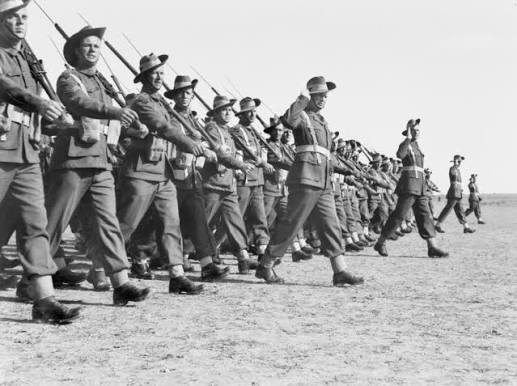
    4 July 1942 — 9th Australian Division joined XXX Corps at El Alamein. The Australians entered the El Alamein line and soon became heavily involved in the July fighting.

    4 July 1942 — HMAS Nepal completed an Operation ES passage. HMAS Nepal berthed near Southampton after a 700 nautical mile passage connected with the Operation ES decoy movement during the Arctic convoy crisis around PQ 17.

    4 July 1945 — 2/9th Battalion prepared for the Penadjam Point landing at Balikpapan. Members of the 2/9th Infantry Battalion embarked in Landing Vehicles Tracked for the move across the bay.

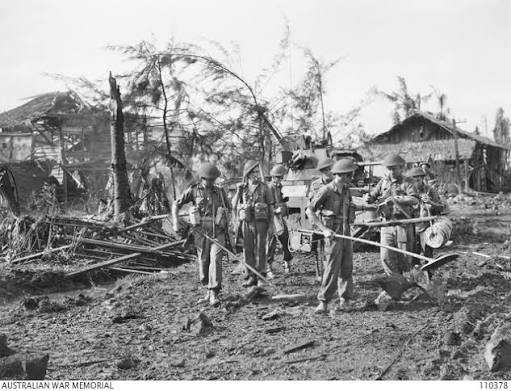
    4 July 1945 — Australian engineers cleared mines at Balikpapan. Sappers of the 2/9th Field Company used mine detectors in the oil refinery area before tanks moved forward during Operation Oboe Two.

    4 July 1945 — Fighting continued near the Opus and Operator features at Balikpapan. AWM material records Japanese dead in dugouts in the 2/33rd Battalion area along the ridge between those features.

    4 July 1945 — RAAF artillery spotting at Lutong, Borneo. An RAAF Auster aircraft was used to pick up an observation officer for artillery spotting with B Troop, 15 Battery, 2/8th Field Regiment.

    4 July 1945 — Lance Corporal Alfred William “Champ” Bell was killed in action at Balikpapan. Bell served with the 2/5th Cavalry Commando Squadron.

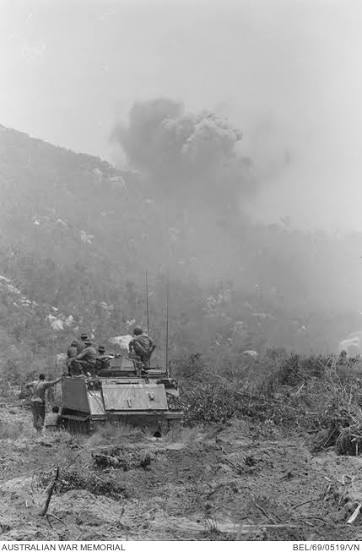
    4 July 1969 — Long Hai Hills mine incident, Vietnam. During the night of 4 July, Australian troops suffered casualties from enemy mines, and Sapper Robert Earl was seriously wounded while assisting with a dust off casualty evacuation.

    4 July 1969 — 5RAR casualties in South Vietnam. Private Leslie James Pettit of 5RAR was killed in action in South Vietnam on this date.

    4 July 1969 — Private Wayne Herbert’s gallantry action. Herbert’s citation relates to his conduct with 7 Platoon, 5RAR, after an enemy mine exploded while the platoon occupied an ambush position.

    4 July 1971 — A Field Battery, Royal Australian Artillery, arrived at Nui Dat. The battery began its Vietnam service supporting Australian infantry operations from the 1st Australian Task Force base.

    4 July 1999 — East Timor crisis.
    A humanitarian convoy was attacked by pro Indonesian militia at Liquiçá during the UNAMET period. Australia already had personnel committed under Operation Faber, and the worsening violence helped set the scene for the Australian led INTERFET deployment in September.

    Oh yeah! There was also certain event in the “land of the Free”.

    In Australia as well as the United States that freedom cannot belong only to those who already possess power. It must also extend to peoples of Colour, Indigenous peoples, Hispanic, Latino and Asian communities, Pacific Islanders, Religous groups, migrants and refugees, people with disabilities, LGBTQ people, the poor, the homeless, and all those who have been pushed to the edge of political, social, and economic life. Freedom that excludes the disadvantaged is not freedom in any meaningful sense. It is privilege wearing the language of liberty.